
Sleeping until noon after several short nights feels like a logical repayment. Extra sleep can genuinely improve sleepiness and mood. Controlled research also shows that different consequences of sleep loss recover at different speeds, while a large weekend timing shift can make Monday harder. Catch-up sleep therefore helps in part and resets nothing completely.
Recovery works, but not equally for everything
Sleep pressure builds when nights are too short, and a longer sleep opportunity gives the body real time to recover. In a laboratory analysis of 221 healthy adults, mood worsened across five nights with four hours in bed per night. A subsequent sleep opportunity ranging from zero to twelve hours improved mood in a dose-response pattern: more sleep helped more. Compared with each participant’s baseline, however, overall mood remained impaired after sleep opportunities shorter than twelve hours. This was a strict protocol rather than a typical working week, but it illustrates the central point: one longer night can help without immediately normalising every accumulated effect.
A weekend is not one uniform repair process
Different systems recover at different rates. In an inpatient study, 15 healthy men followed five nights with five hours in bed by two nights with a ten-hour sleep opportunity. One part of the lipid response returned to baseline, while reduced insulin sensitivity and a measure of glucose regulation did not fully recover. This does not mean that a short weekend causes metabolic disease in every person. The small laboratory study instead shows why “I feel awake again” and “all physiological effects have been restored” are not the same statement.
Sleeping very late also shifts your timing
In another randomized laboratory trial, four nights with five-hour sleep opportunities were followed by two self-selected recovery days. Participants woke roughly three and a half to almost four hours later on the weekend than at baseline, and their internal circadian timing moved later. When short nights resumed, the weekend did not prevent unfavourable changes in energy intake, body weight and insulin sensitivity. The protocol was intentionally pronounced and cannot be mapped directly onto an ordinary Sunday. It does reveal the trade-off: sleeping longer creates recovery time, while a very large time shift may make the return harder.
Long-term protection has not been established
Observational data does not provide a guarantee either. A UK Biobank study compared device-measured weekday and weekend sleep in more than 70,000 adults and followed outcomes for an average of eight years. After statistical adjustment, weekend catch-up sleep was associated with neither lower nor higher mortality or new cardiovascular disease. That does not prove it has no effect: people do not choose their sleep at random, and sensors cannot capture every cause. The careful conclusion is that catch-up sleep may help in the short term, while long-term protection should not be assumed.
A weekend strategy that fits real life
When sleep is missing, extra sleep makes more sense than deliberately staying awake. Try not to close the entire gap only by waking extremely late. Where life allows, combine a somewhat earlier bedtime with a moderately later morning, then move back towards your weekday anchor on Sunday. Track sleep duration alongside bedtime, wake time, awakenings and Monday energy. If you need a very large catch-up almost every weekend, treat that mainly as a clue to review the sleep opportunity available during the week. Persistent insomnia, severe daytime sleepiness or observed breathing pauses need professional assessment.
Common questions
- Is sleeping in at the weekend always bad?
- No. When sleep is missing, longer sleep can be useful and noticeably restorative. The problem is expecting it to reverse every effect of a consistently short week. A very large schedule shift can also make the transition to Monday more difficult.
- Can one weekend make up for a week of short sleep?
- Only partly. Studies find improvement in selected outcomes such as mood or certain metabolic responses, while other changes can remain after one or two recovery nights. Regularly making enough room for sleep remains the more robust foundation.
Sources
- Ad libitum Weekend Recovery Sleep Fails to Prevent Metabolic Dysregulation during a Repeating Pattern of Insufficient Sleep and Weekend Recovery Sleep
- Two nights of recovery sleep restores the dynamic lipemic response, but not the reduction of insulin sensitivity, induced by five nights of sleep restriction
- The dynamic responses of mood and sleep physiology to chronic sleep restriction and subsequent recovery sleep
- Device-measured weekend catch-up sleep, mortality, and cardiovascular disease incidence in adults
Gearstack Health
Separate recovery from a schedule shift
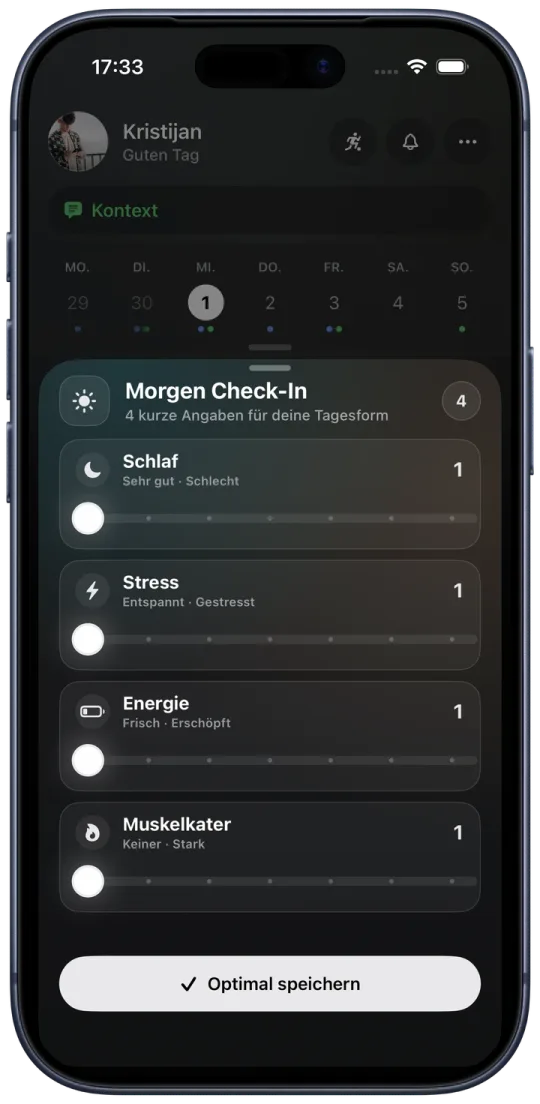
Gearstack puts sleep duration, sleep timing, HRV and daily readiness on one timeline, helping you see whether the weekend restored you or mainly moved the clock.
Gearstack Health is a wellness and prevention product, not a medical device. This text does not replace medical diagnosis, treatment or emergency care.
AI-assisted, reviewed by Kristijan Bezjak, founder of Gearstack.