
After deep sleep, REM is the second number that worries people in the morning. It swings more than anything else in a sleep report and reacts to things that have nothing to do with your health. This guide covers what is typical, when a low value stays explainable, and when it stops being so.
What happens in REM sleep
REM stands for the rapid eye movements that mark the phase. The brain works almost as actively as when awake, while the skeletal muscles are effectively switched off apart from the eyes and the breathing muscles. Most dreams you can recall are formed here, and this is where learning is bound into memory, especially connections and emotional experience. Heart rate and breathing turn irregular, which is the only reason wearables can spot the phase at all.
What counts as typical
In adults, lab studies put the REM share at roughly twenty to twenty-five percent of sleep time. On seven to nine hours that is about ninety to a hundred and twenty minutes. The share drifts down across the decades, with older adults more often in the fifteen to twenty percent band. There is, however, no medically defined nightly minimum that an individual has to hit. Those percentages describe groups, they are not targets for you.
REM sits in the second half of the night
The distribution explains most low readings. Deep sleep dominates the early hours, REM grows with every cycle and peaks in the last two cycles before waking. Going to bed late and still getting up at six does not shave evenly off all phases, it cuts precisely where REM lives. One hour less sleep at the end of the night can cost a third of your REM. That is the most common explanation for a strikingly low value and has nothing to do with a disorder.
Four things that reliably cut it
Alcohol suppresses REM in the first half of the night and produces a restless rebound later. Too little time in bed removes exactly the REM-heavy cycles. Certain medications, many antidepressants among them, lower the share markedly and for months. And sustained stress shifts the balance of phases, usually at the expense of recovery overall. If your value stays low for weeks, the cause is almost always somewhere in this list before illness comes into it.
What your watch actually knows
Sleep phases are scored in a lab from brain activity, eye movement and muscle tone. A watch has none of that. It infers the likely phase from movement, heart rate and its variability, and REM is the hardest category to hit, because in sensor data it partly looks like light sleep and partly like lying awake. For a trend across weeks the estimate is usable. For matching a single night against a chart it is not.
When to actually look into it
What stands out is not a low value but a low value plus daytime sleepiness across several weeks despite enough time in bed. Add the warning signs that have nothing to do with percentages: loud snoring with breathing pauses, never waking rested, or falling asleep during quiet moments in the day. That combination belongs in front of a doctor regardless of what the watch shows. A single twelve percent reading after a short night is not a diagnosis, it is arithmetic.
Common questions
- I only got ten percent REM. Should I worry?
- Not over one night. Look at time in bed and alcohol the evening before first, that explains most outliers. Only if your weekly average stays low and you feel tired during the day is it worth raising with a doctor.
- Can I increase REM sleep on purpose?
- Not directly, but the most effective step is mundane: go to bed earlier. Because REM sits at the end of the night, every extra half hour of sleep returns a disproportionate amount of it. Regular timing and less alcohol pull in the same direction.
- Why do two devices report such different REM values?
- Because each system uses its own rules to infer phases from pulse and movement, and REM is the least certain of those calls. Never compare two devices with each other, only the same trend within one source.
Sources
Gearstack Health
Your numbers in context
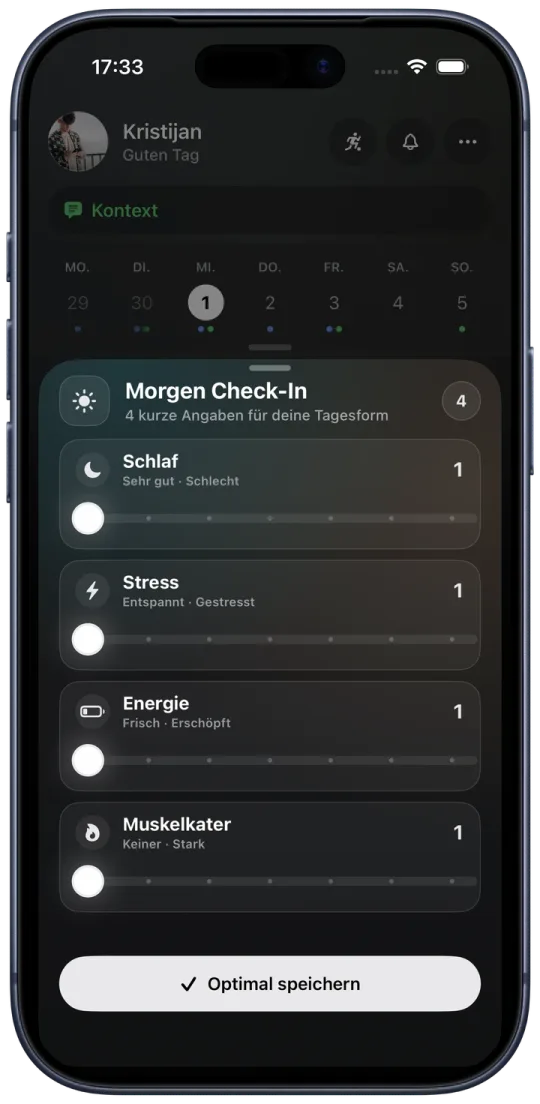
Gearstack Health turns HRV, sleep and training into a daily readiness view with clear next steps.
Gearstack Health is a wellness and prevention product, not a medical device. This text does not replace medical diagnosis, treatment or emergency care.
AI-assisted, reviewed by Kristijan Bezjak, founder of Gearstack.