
The afternoon dip arrives more reliably than most calendar entries. A short sleep could help, yet many people skip it, afraid of waking up groggy or of lying awake at bedtime. Both worries are legitimate, and both can be defused with two levers: duration and time of day. The research on this has become surprisingly specific.
Ten minutes beats thirty
A widely cited study had 24 healthy young adults sleep either not at all or for exactly 5, 10, 20 or 30 minutes in the early afternoon, after a night restricted to about five hours. The result surprises many: the 10-minute nap produced the clearest improvements in alertness and performance, immediately after waking and lasting for roughly two hours. Five minutes was too little to do much. The longer naps helped too, but only after a delay. If all you have is a short break, a brief nap loses you nothing. Quite the opposite.
Why longer naps leave you groggy first
After about 20 to 30 minutes of sleep, the odds of slipping into deeper sleep stages rise. Anyone woken from those stages knows the feeling: heavy limbs, slow thinking, the opposite of refreshed. This state is called sleep inertia, and after longer naps it can last half an hour or more before the recovery benefit shows through. In the studies, the 25 and 30 minute conditions showed exactly this pattern: a dip first, then the improvement. For everyday life that means either staying deliberately short, or planning enough buffer for the grogginess to fade before concentration matters again.
Early afternoon is the natural window
The body runs through a small circadian dip in the early afternoon, when falling asleep is easier and a nap fits neatly into the daily rhythm. The later the nap, the more it eats into sleep pressure, the tiredness built up across the day that carries you into sleep at night. A nap in the early evening can push the whole night noticeably later. As a rough guide, keep naps before the late afternoon and leave the evening sleep-free.
When a nap is not a good idea
If you regularly lie awake at bedtime, daytime sleep may be relocating exactly the sleep pressure your night is missing. In that situation it is worth trying one or two weeks strictly without naps and watching whether falling asleep gets easier. It is also worth paying attention if a nap keeps stretching toward an hour: a strongly growing need for daytime sleep can simply mean your nights are too short, and the nap is then treating the symptom rather than the cause. Persistent, pronounced daytime sleepiness despite long enough nights deserves a medical check.
How to test your own nap recipe
Set an alarm for 15 to 20 minutes of lying down, since falling asleep usually takes a few minutes, leaving a short net sleep. Place the nap in the early afternoon, ideally around the same time each day, and watch two things over one or two weeks: how alert you feel in the hour after the nap, and whether your night shows changes in how fast you fall asleep and how often you wake. If the night stays stable, you have gained a tool. If falling asleep drifts later, shorten the nap or move it earlier before dropping it entirely.
Common questions
- What about the coffee nap, an espresso right before lying down?
- The idea: caffeine takes about 20 to 30 minutes to act and takes over as the short sleep ends. A few small studies found supporting hints, but the trick is not broadly proven. And if you nap late in the afternoon, you are adding caffeine to the second half of your day, which can burden the night on top.
- My naps often run past an hour. Is that bad?
- Sleep that long is no longer a power nap but a full sleep cycle. Occasionally, say after a very short night, that is sensible repair. If it happens regularly, it is more likely a sign your nights are delivering too little sleep, and the lever is the night, not the afternoon.
Sources
Gearstack Health
Night and nap in the same picture
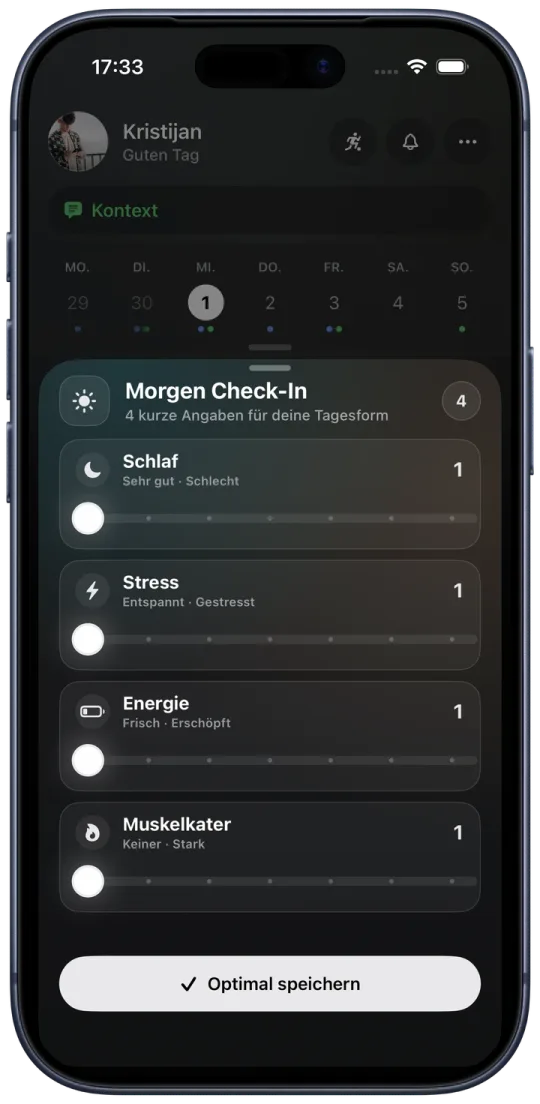
Gearstack shows sleep duration, awakenings and recovery as one trend, so you can see whether your nap supports the night or steals its pressure.
Gearstack Health is a wellness and prevention product, not a medical device. This text does not replace medical diagnosis, treatment or emergency care.
AI-assisted, reviewed by Kristijan Bezjak, founder of Gearstack.