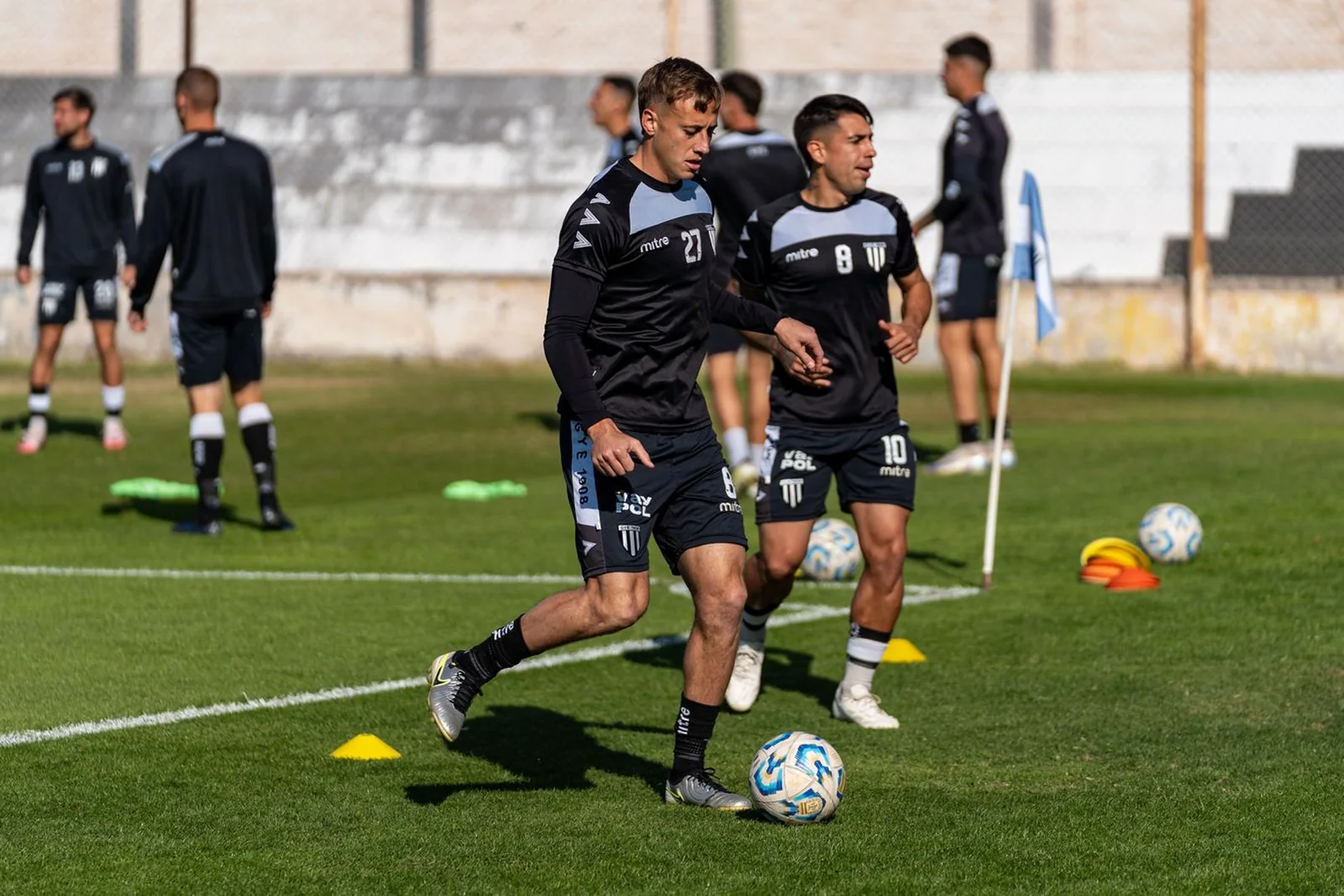
A fourteen-year-old trains Tuesday and Thursday at the club, plays Saturday, has PE on Wednesday and kicks about in the park on Sunday. His coach sees two of those sessions. That gap is where the typical overload stories in youth football come from, and it is why measuring load pays off. It works with a single number per session, no devices needed.
One number per session: session RPE
The simplest proven method comes from sports science and is called session RPE: about ten minutes after training the player rates how hard the session was overall, on a scale from one to ten. That number times the duration in minutes gives the session load. An intense ninety-minute session rated eight counts 720 points, an easy one rated four counts 360. The value captures everything at once: running, duels, heat, even the school stress that makes a session feel heavier. Only the routine matters: always the same moment, always the player’s own rating, never the coach’s.
The week counts, not the single day
The sessions of a week add up to the weekly load, and only that is manageable. A hard Tuesday is no problem if Thursday stays easy. As a rule of thumb for youth players, raise the weekly load by no more than about ten percent above the accustomed level of the past weeks. If the load doubles within two weeks instead, studies with youth players show a clear rise in complaints, regardless of how fit the player looks. The accustomed level differs per player: 2000 points are routine for one and a record for another.
The dangerous weeks are in the calendar
Overload in youth football has favourite dates: the first week after the summer holidays, tournament weekends with four matches in two days, the move to a new club at a higher level and the return from injury. In all these cases a high load meets a body that is currently used to little. The rule against it is unspectacular: after any break of two or more weeks, restart at about half the accustomed load and build up over two to three weeks. It costs nothing but patience, and it is cheaper than six weeks of shin trouble.
Growth moves the limits
In adults the load limit is fairly stable, in adolescents it moves. During the growth spurt, for many between thirteen and fifteen, bones lengthen faster than tendons and muscles keep up, and the same training week that was fine three months ago suddenly irritates the patellar tendon or the heel. Whoever records load often sees the pattern in this phase: same load, more complaints. The answer is a temporarily reduced weekly load and more mobility work, not a break from football.
From paper to overview: the whole squad on one page
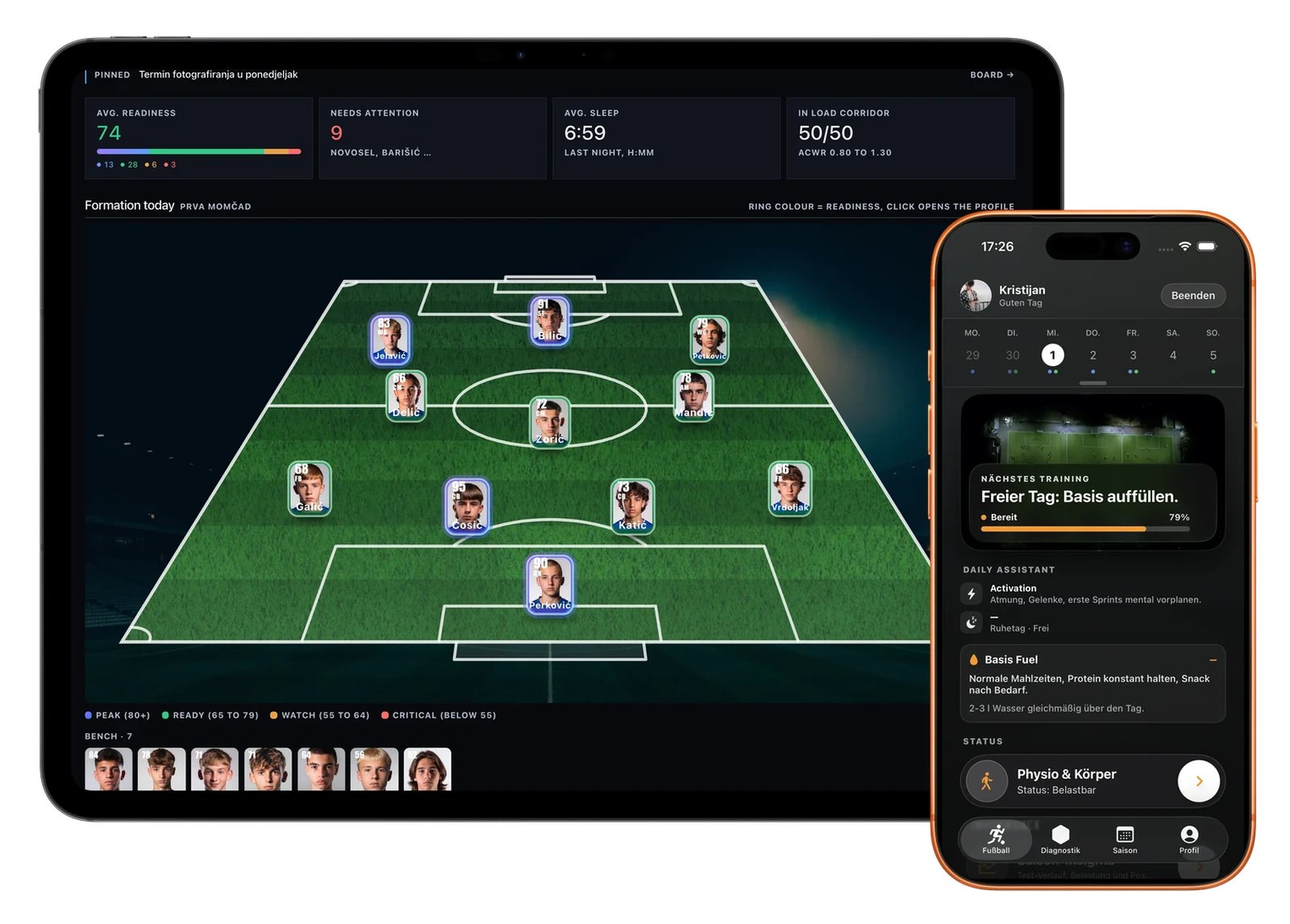
The method works on paper, it only fails at the analysis: twenty players times four sessions is eighty numbers per week, and nobody turns those into trends voluntarily. That is the part a team dashboard like Gearstack’s takes over. Players tap their rating into the phone after training, whoever wears a sports watch adds heart rate and sleep automatically, and the coach sees one page: each player’s weekly load compared with his own accustomed level, outliers first. The decision stays with the coach, the dashboard just makes sure it rests on numbers instead of impressions.
Common questions
- How do you measure training load without GPS and heart rate straps?
- With session RPE: the effort of the session on a scale from one to ten, rated by the player about ten minutes after training, multiplied by the duration in minutes. The method is scientifically validated and costs nothing.
- How much may weekly load rise for youth players?
- As a rule of thumb around ten percent above the accustomed average of the previous weeks. Jumps to one and a half or two times the usual load within a short time go along with clearly more complaints in studies.
- What is the ACWR (acute:chronic workload ratio)?
- The ACWR is the ratio of acute load (usually the last week) to chronic load (usually the average of the past four weeks). Values clearly above 1.3 to 1.5 mark the load spikes that studies link to more complaints. The rule of thumb in this article is the simplified version of exactly this concept.
- Do PE lessons and park football count towards training load?
- Yes, the body does not distinguish by organiser. Players should therefore report all sporting sessions, not just club training. A short self-report on the phone is more practical for that than any attendance list.
For clubs: Eleven players, eleven readiness scores
Sources
Gearstack Health
Your numbers in context
Gearstack Health turns HRV, sleep and training into a daily readiness view with clear next steps.
Gearstack Health is a wellness and prevention product, not a medical device. This text does not replace medical diagnosis, treatment or emergency care.
AI-assisted, reviewed by Kristijan Bezjak, founder of Gearstack.