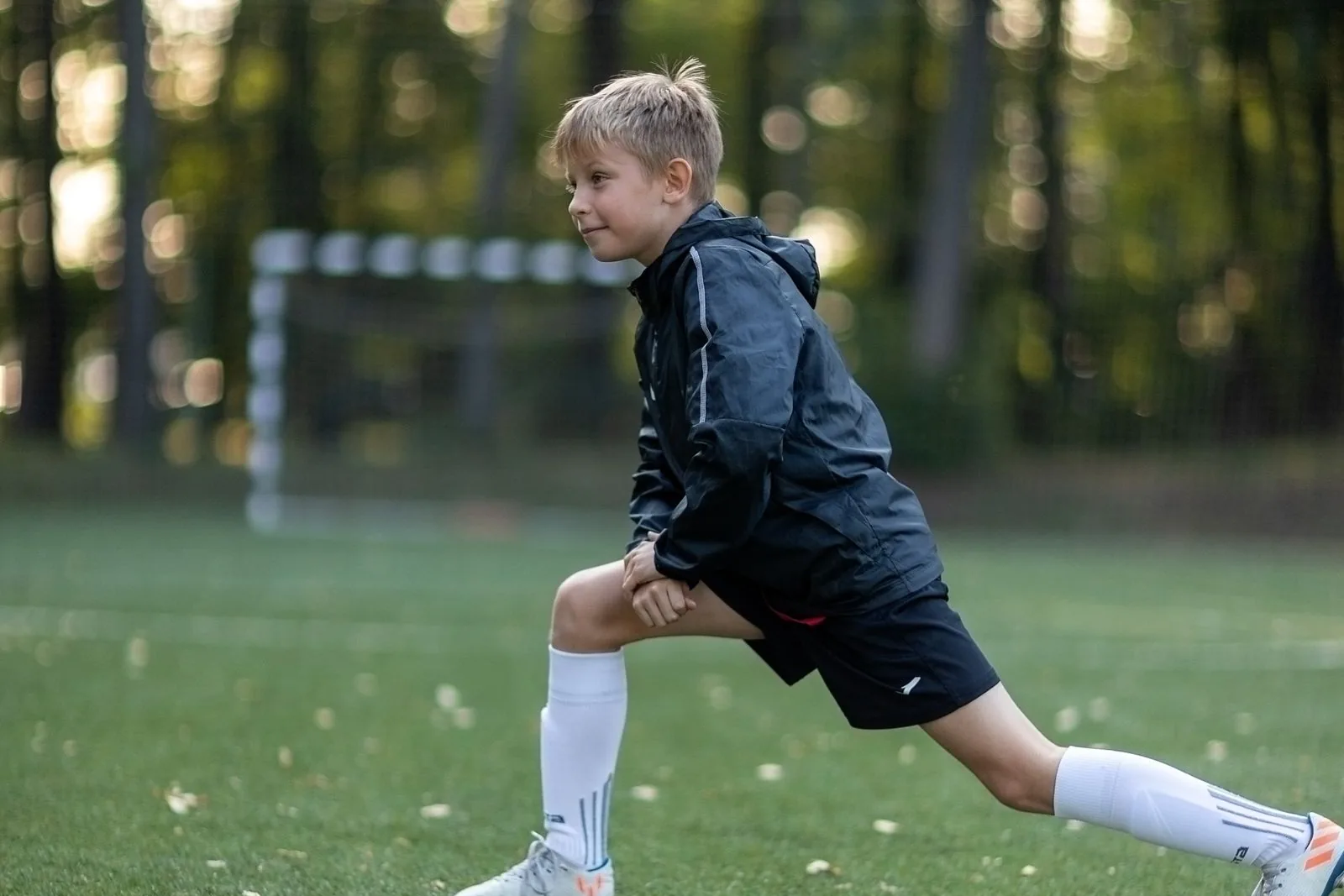
Anyone who has worked in youth football for a while shares the feeling that more players are sidelined than there used to be. The feeling is accurate: sports injuries in children and adolescents have risen markedly over the past two decades, and a large share are not accidents but overuse. Overuse has causes, and almost every one of them can be changed.
More absences, and they are rarely accidents
Sports injuries are among the most common reasons children and adolescents see a doctor after an accident, and clinics have reported an increase for years. The revealing part is the type of injury: alongside the classic sprained ankle, it is above all overuse problems that are growing, complaints that build up over weeks rather than happening in a tackle. A twisted knee is bad luck. A tendon attachment that has been aching for four weeks is almost always a question of load management.
Growth changes what a body can absorb, mid-season
During a growth spurt, bones grow faster than muscles and tendons can follow. Growth plates and tendon attachments go through a phase of heightened sensitivity, which is where typical adolescent complaints below the kneecap or at the heel come from. The tricky part: this phase often falls exactly in the years when training and ambition rise the most. A fourteen-year-old is not a small adult, and the same training plan can be a completely different burden for two players of the same age group depending on where they are in their growth.
Early specialisation: one sport, all year round
More and more children play just one sport from an early age, all year, without a real break. Studies link exactly this pattern to more overuse injuries: the same movements, the same structures, no recovery through variety. A rough rule of thumb from sports medicine is that weekly training hours should not permanently exceed the child’s age in years, and several weeks per year entirely without the main sport should be part of the plan. A second sport is not a detour, it is protection.
Load spikes: the camp, the tournament week, the club switch
The body copes with high load remarkably well when it has been led there step by step. What it copes with badly are jumps: the summer camp with three sessions a day after six weeks of holiday, the tournament week with five matches, or the move to a club that trains twice as often. Studies in adolescent athletes show that an even weekly load goes along with fewer complaints than rapid increases. The practical rule is unspectacular: volume and intensity rise slowly, and a hard week is followed by a calmer one.
Sleep is the underrated factor
In a widely cited study of adolescent athletes, those who slept less than eight hours on average had a 1.7 times higher injury risk than those who slept more. At the same time, measurements show that adolescents in regular training often sleep only around seven hours and miss the recommendation on most nights. Late sessions push falling asleep even further back. If you want to prevent injuries, you do not start with tape, you start with a training end time that makes an early night possible at all.
What actually protects
The most effective measures are well known and unspectacular. A structured warm-up programme with jumping, stability and strength elements reduces injury numbers in studies by roughly a third when it runs consistently two to three times a week. Age-appropriate strength training is not a risk but protection for tendons and joints. And load belongs on record so that spikes become visible before they hurt. No devices are needed for that: the perceived effort after the session multiplied by the minutes gives a weekly load you can compare. What stands out is rarely the high numbers, it is the fast changes.
The part that concerns the club
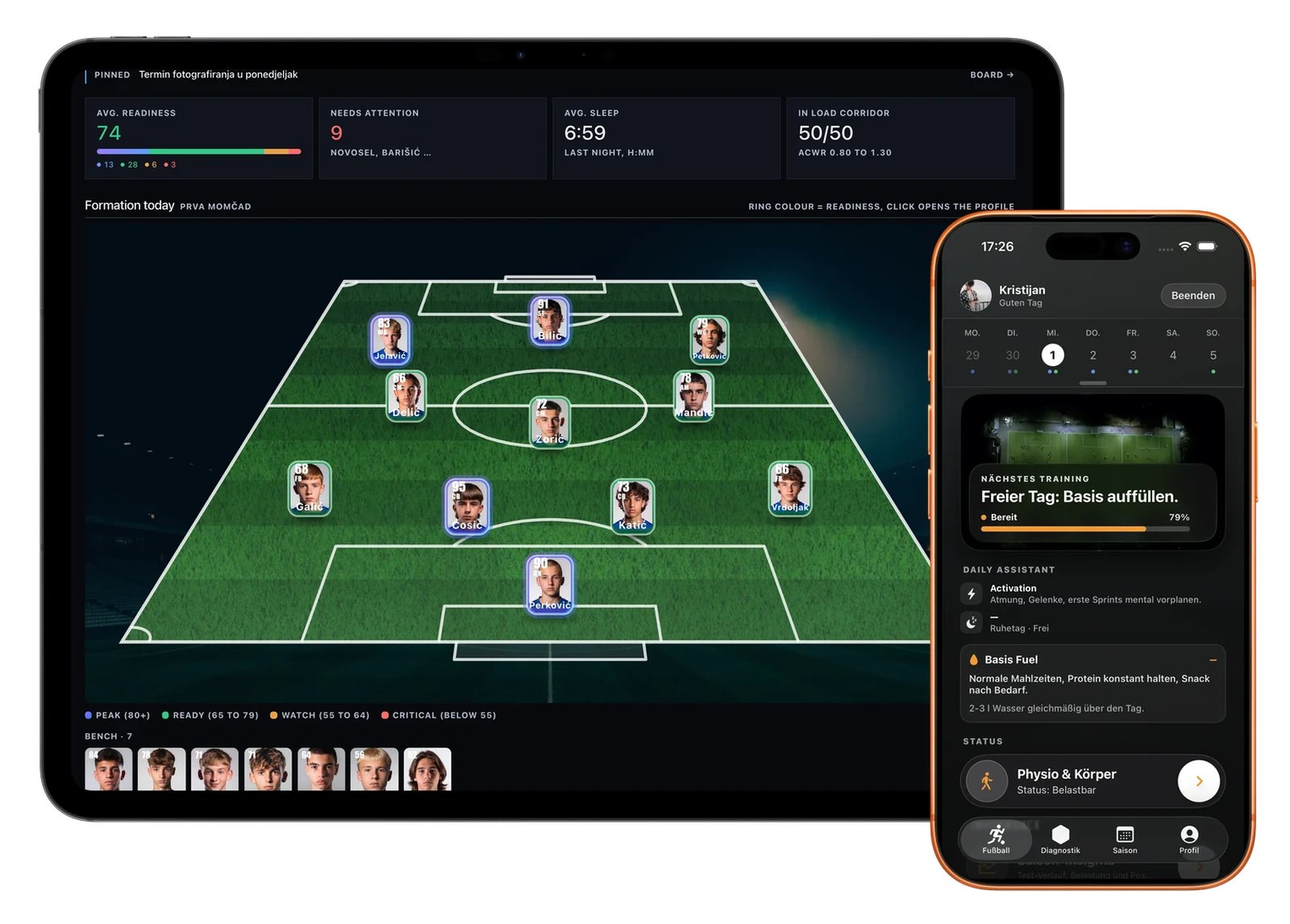
No youth coach can look into heads or tendons, but every club can record three things: who attended training, how hard the session was for each player, and who is currently carrying a knock. Out of these three unspectacular entries emerges the picture that shows overload early, the player whose load has doubled within two weeks stands out beforehand, not in the treatment room. Just as important is the culture behind it: whoever reports a complaint needs the certainty of not automatically losing their place because of it. Otherwise nobody reports anything.
Common questions
- From what age does strength training make sense for adolescents?
- With clean technique and age-appropriate supervision, much earlier than long assumed. Controlled strength training is now considered one of the most effective protective factors against injuries, what matters is execution and gradual progression, not age alone.
- How do I recognise overuse before it becomes an injury?
- Typical signs are pain at the start of a session that disappears with warming up, a recurring ache in the same spot, and a performance dip despite normal training. These signals are the moment to react, with reduced load and, if complaints persist, a medical assessment.
- Does my child have to quit the second sport to get better at football?
- The evidence points rather the other way. A broad athletic base lowers the overuse risk, and most athletes who make it far specialised late. In most cases the second sport is a gain, not an obstacle.
For clubs: Eleven players, eleven readiness scores
Sources
Gearstack Health
Your numbers in context
Gearstack Health turns HRV, sleep and training into a daily readiness view with clear next steps.
Gearstack Health is a wellness and prevention product, not a medical device. This text does not replace medical diagnosis, treatment or emergency care.
AI-assisted, reviewed by Kristijan Bezjak, founder of Gearstack.