Most sleep discussions begin with hours. How much your sleep and wake times move from one day to the next matters too. This experiment makes consistency visible for one week. It does not promise a perfect night and it is not a treatment for a sleep disorder. It simply helps you learn whether a steadier rhythm is realistic in your life and how you feel when you try it.
Consistency is not the same as duration
Two weeks can contain the same average hours of sleep and still feel completely different. Going to bed early one day, very late the next and sleeping until noon at the weekend keeps shifting the schedule. Sleep consistency describes how similar sleep and wake timing remains across days. It does not replace adequate sleep duration; it adds another dimension. The aim of this experiment is therefore not to make too little sleep look healthy because the diary is tidy. You are looking for a realistic window that allows enough sleep and can stay reasonably similar on most days.
What the evidence shows – and what it cannot
A large prospective cohort study using objectively measured activity data found that more regular sleep-wake patterns were associated with more favourable long-term health outcomes and predicted some risks better than sleep duration alone. That is an important signal, but it does not prove that regular timing caused the difference. Observational research cannot fully separate lifestyle, existing health and social factors. The practical conclusion is modest: consistency is worth observing, but it is not a guarantee and it does not replace professional assessment when sleep problems persist.
Day zero: choose an anchor you can keep
Start with wake time because work and family often make it less flexible. Choose a narrow but realistic window for seven days, then work backwards to leave enough time in bed. Include commuting, children, shifts and weekend plans instead of designing an imaginary perfect week. Add one small evening cue, such as dimming lights, charging devices, laying out clothes or placing a book by the bed. The anchor should reduce decisions, not create another performance target. If one night goes off plan, continue the next day rather than trying to repair it with a dramatic reset.
Seven nights, only four notes each morning
Record approximate sleep time, wake time, whether you had a long waking period and how restored you feel in the morning. Wearable data can support the exercise, but it does not need to identify every sleep stage perfectly. What matters is observing all seven days in the same way. Briefly mark context such as alcohol, late intense training, illness or an unusual shift. Resist introducing a new rule after every night. A short series is more useful than a single score for seeing whether timing becomes steadier and whether the change matches your experience.
Review the experiment on the eighth morning
Do not ask only whether you stayed inside the window. Check whether it allowed enough sleep, how widely your times moved and whether morning energy, falling asleep or daytime sleepiness felt different. Keep the smallest anchor that helped and change only one additional element. Shift workers may need separate rhythms for different blocks rather than the same clock time every calendar day. Ongoing insomnia, severe daytime sleepiness, breathing pauses or other concerning symptoms need professional assessment; tracking can describe a pattern, but it cannot diagnose its cause.
Common questions
- Can I sleep later at the weekend?
- Yes. The experiment should not ignore real life. Notice large shifts and choose a rhythm that still supports recovery. Regularly needing a very long weekend catch-up may indicate that your weekday schedule is not leaving enough room for sleep.
- Does this work for shift workers?
- The same daily clock time is often unrealistic with rotating shifts. Use repeatable anchors within each shift block and review transition days separately. Discuss persistent or distressing sleep problems with a healthcare professional.
Sources
Gearstack Health
Make your sleep rhythm visible
Gearstack brings sleep timing, recovery and daily readiness into one trend, so you can see what changed after seven nights instead of guessing.
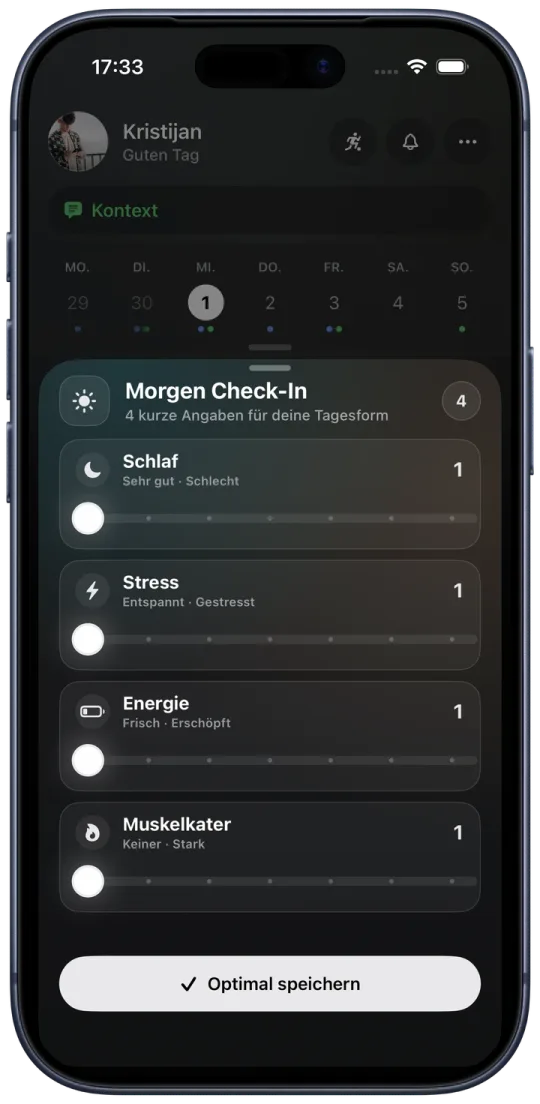
Gearstack Health is a wellness and prevention product, not a medical device. This text does not replace medical diagnosis, treatment or emergency care.
AI-assisted, reviewed by Kristijan Bezjak, founder of Gearstack.