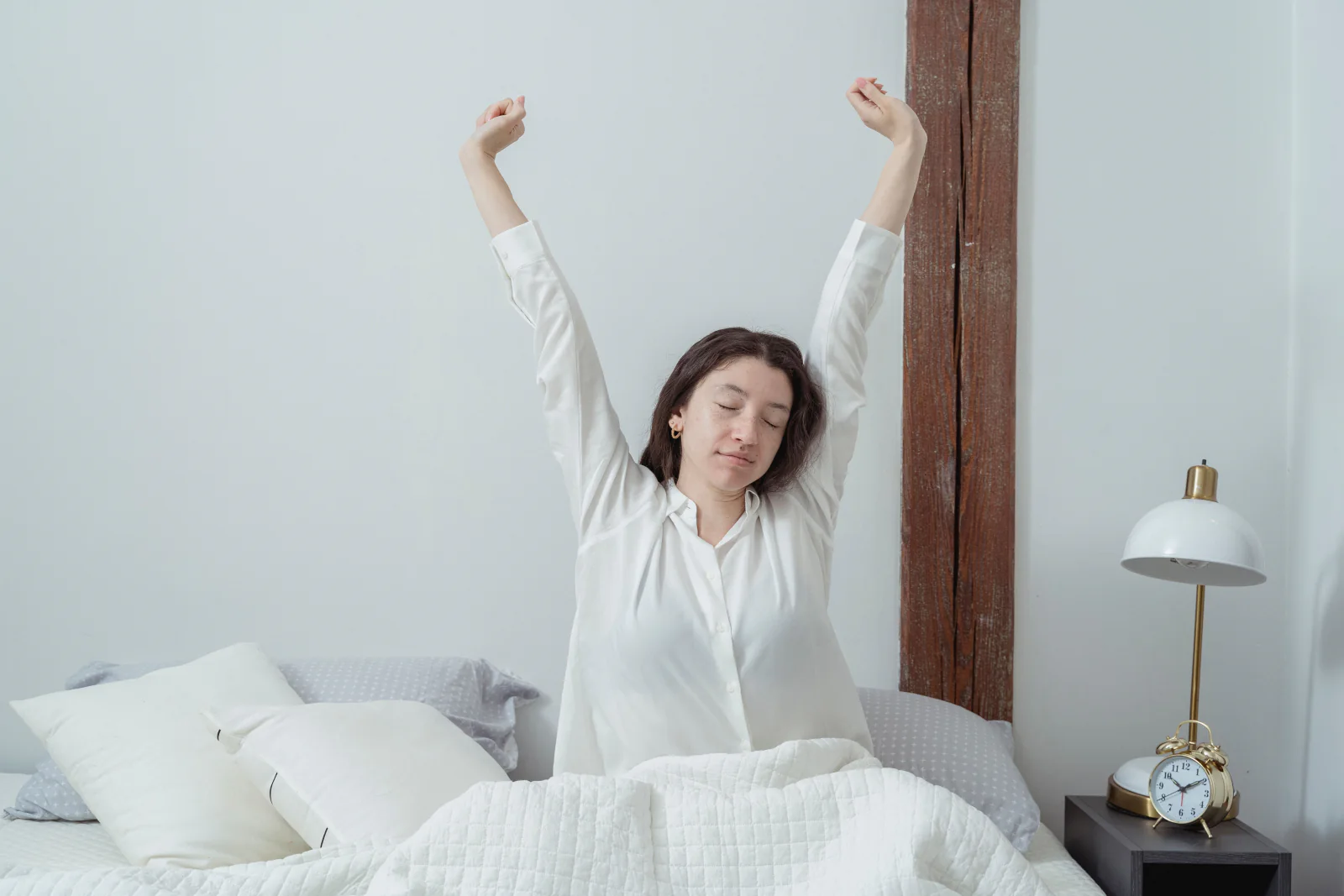
Eight hours is treated as the answer to every sleep question. Duration is only one of several factors, and in the data it is often not the most informative one. This guide shows what counts instead.
Eight hours is an average, not a target
The common recommendation of seven to nine hours for adults describes a range that most people fall into, not a value everyone must hit. Individual need varies considerably and changes across a lifetime. If you wake without an alarm after seven hours and get through the day without a crash, you slept enough, even if an app grades it differently. Conversely, nine hours of fragmented sleep is not a good number, just a long time in bed.
What quality actually means
Three things are meant when people say quality. First, efficiency: how much of your time in bed you actually slept. Second, continuity: how often and how long the night was interrupted. Third, timing: whether your sleep lines up with your internal rhythm or runs against it. All three can be influenced, and all three affect how you feel the next day more than half an hour more or less in bed.
Waking up is normal
Between sleep cycles everyone wakes briefly several times, usually without remembering it later. If your watch shows a handful of short wake phases, that is not a fault. How many it reports depends heavily on how sensitively that device counts, which is why the numbers are not comparable between vendors. Interruptions become a problem only when they are long, when you lie awake and cannot get back. People who discover the short wake moments in an app and start worrying about them create exactly the tension that turns normal interruptions into real ones.
Regularity is the underrated lever
If you can change only one thing, change the clock time, not the duration. A consistent bedtime and wake time stabilises the internal rhythm, and a stable rhythm improves efficiency and continuity without you spending longer in bed. That includes weekends: two days with markedly shifted times act like a small time zone change and cost half the week to recover from. It is why Monday often feels worse than Friday.
What the overnight values say about it
Interestingly, HRV and overnight resting heart rate reflect quality better than duration does. A short, calm, consistently timed night often produces better values than a long, restless one. Tracking both in parallel makes this visible in your own trend within a few weeks. That is exactly why sleep duration should not be read on its own but together with the recovery values from the same night. Duration says how long the opportunity was. The overnight values say whether it was used.
Where to start
In this order: fixed times, a dark and cool room, no alcohol late in the evening, no intense training in the last three hours, and bright light early in the morning. Those five cost nothing and work for almost everyone. Only when they have been in place for several weeks and you still wake unrested is it worth digging deeper. Persistent daytime sleepiness despite adequate time asleep, loud snoring or breathing pauses belong to a doctor, not to an app.
Common questions
- I sleep only six hours but feel fine. Do I need more?
- If you wake on your own without an alarm, have no afternoon crash and do not sleep much longer at weekends, there is little arguing with it. Sleeping markedly longer on free days is the most reliable sign that something is missing during the week.
- Does catching up at the weekend help?
- Part of the deficit can be recovered that way, but not all of it, and the price is a shifted rhythm for the following days. An extra hour is harmless, three hours act like mild jet lag.
- Does a nap hurt the following night?
- Short and early, no. Twenty to thirty minutes in the early afternoon does not disturb the night for most people. Long or late naps do reduce sleep pressure in the evening and push falling asleep later.
Sources
Gearstack Health
Your numbers in context
Gearstack Health turns HRV, sleep and training into a daily readiness view with clear next steps.
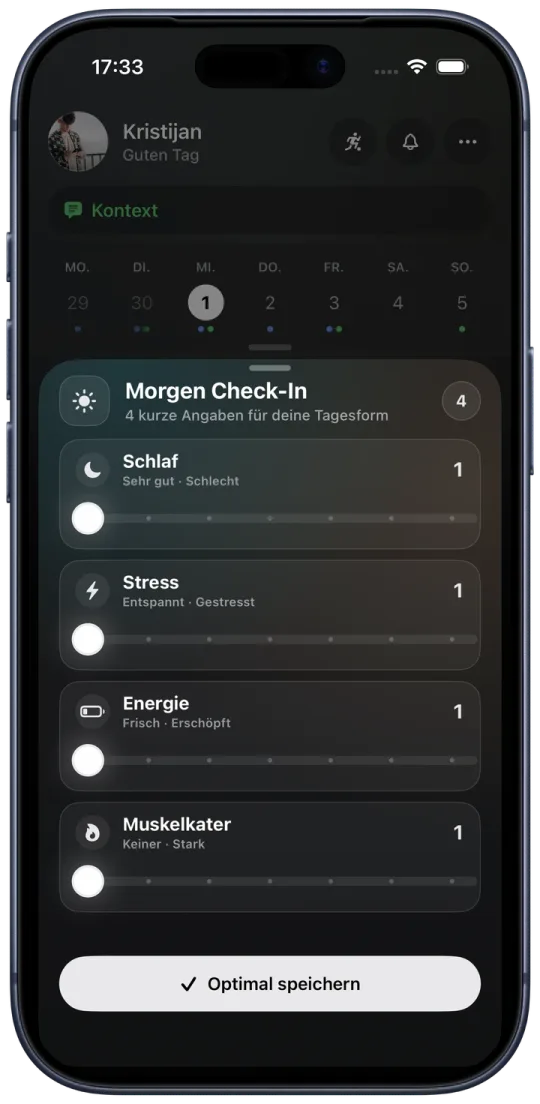
Gearstack Health is a wellness and prevention product, not a medical device. This text does not replace medical diagnosis, treatment or emergency care.
AI-assisted, reviewed by Kristijan Bezjak, founder of Gearstack.