
A good challenge gets people moving together without making the already fittest person the automatic winner. It needs to reward progress, respect different starting points, and allow rest. A leaderboard on its own cannot do that.
Why the same number is not the same goal
Ten thousand steps can be an ordinary working day for one person and a major progression for another. Absolute leaderboards mix fitness, occupation, commute, age, mobility, and available time. They therefore measure starting conditions as much as effort. A challenge becomes fairer when it rewards change from a person’s normal level or completion of an individual target. Beginners and trained participants can then share one format without being asked to hit the same daily number.
What social incentives can do
In the randomized STEP UP trial, gamified programs using support, collaboration, or competition increased physical activity during a 24-week intervention compared with a control group. Competition produced the largest increase in that trial, while activity declined across groups after the intervention ended. This suggests that design and social dynamics matter, not that competition is best for every person. The participant group and the specific step-tracking context limit how confidently the findings can be transferred to other populations and sports.
Start with a personal baseline
Observe an ordinary week before choosing an aspirational number. That gives you a personal baseline from which to set a realistic next step. A shared challenge can score the percentage of each person’s target or the number of successful days instead of the highest absolute distance. Adjustment belongs in the design too: someone who becomes ill, travels, or faces an unusually demanding week should be able to change the target or pause. A baseline is a planning reference, not a judgment about fitness or health.
Choose the social rule deliberately
Support, collaboration, and competition create different experiences. A buddy can prompt and encourage, a team can build shared reliability, and a direct duel can give some people extra focus. Before starting, decide whether results are public, how teams earn points, and what happens on a rest day. Avoid mechanics that punish illness, injury, or recovery. Good rules make the next useful action visible; poor rules turn health data into a stage for embarrassment.
Design a challenge that still helps after the finish
Use a manageable duration, a clear starting point, and regular fresh starts. Pair the activity target with a check-in: how was sleep, how does the load feel, and does the task still fit daily life? At the end, look beyond the leaderboard. Ask who built a routine, which rule helped, and whether activity continues after the challenge. If motivation disappears as soon as points and notifications stop, the game may have worked briefly, but the habit is not stable yet.
Common questions
- How can a challenge be fair across very different fitness levels?
- Score progress from a personal baseline, percentage of an individual goal, or number of consistent days instead of absolute steps or distance. Define how pauses and target adjustments work before the challenge starts.
- Is competition more motivating than collaboration?
- Not for everyone. One randomized trial found the largest activity increase in its competition arm, but support and collaboration also worked during the intervention. Personality, group dynamics, and the specific goal all influence the result.
For clubs: Eleven players, eleven readiness scores
Sources
Gearstack Health
Measure progress at your level
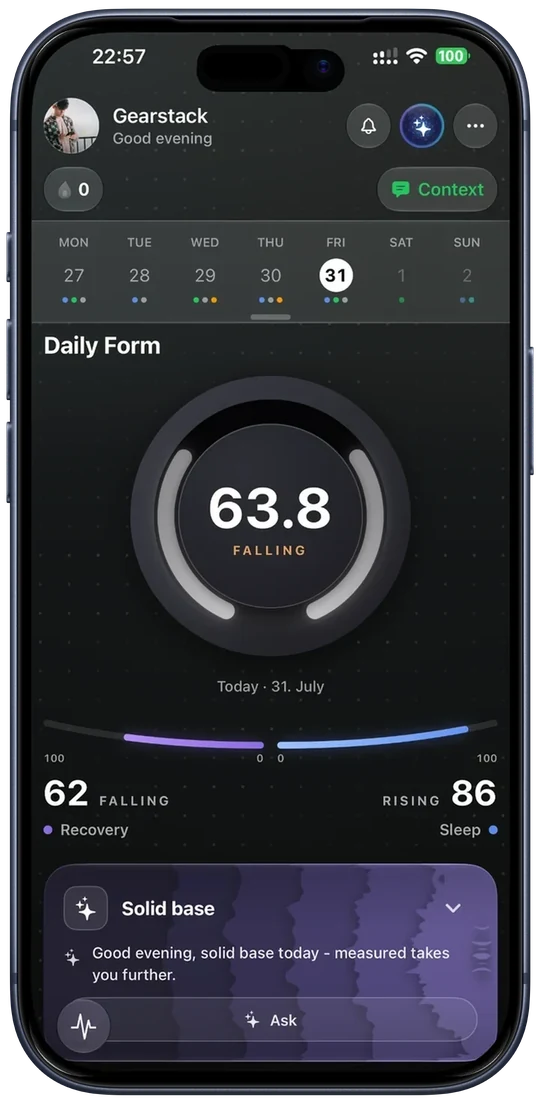
Gearstack brings activity, readiness, and the Arena into one context. Choose a challenge that fits real life and watch recovery as closely as movement.
Gearstack Health is a wellness and prevention product, not a medical device. This text does not replace medical diagnosis, treatment or emergency care.
AI-assisted, reviewed by Kristijan Bezjak, founder of Gearstack.