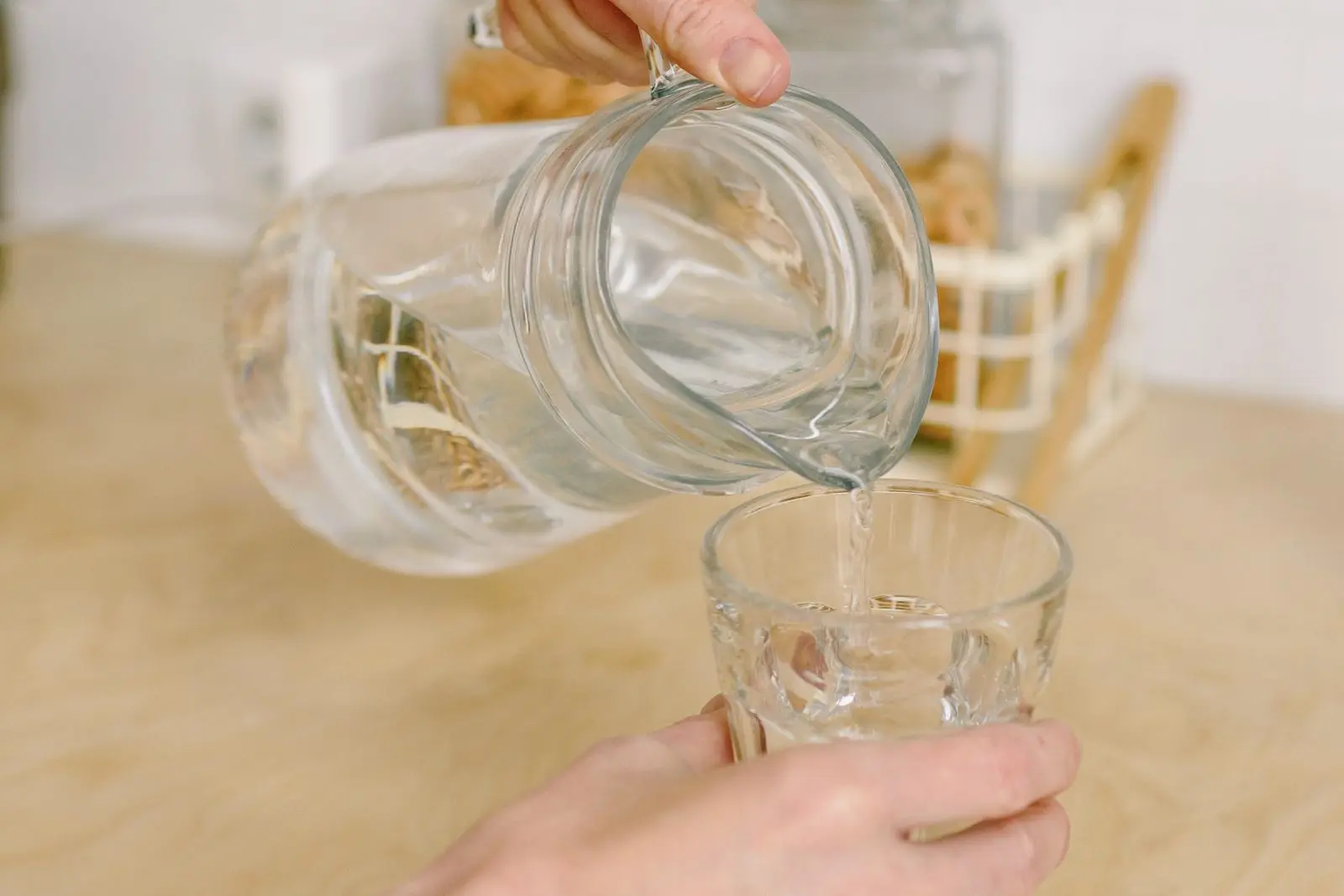
Hardly any everyday rule holds on as stubbornly as two litres a day. It is not wrong, but it means something other than most people think, and it does not apply to everyone equally. This guide puts the number in context and names the simplest sign that you are in the right range.
What the guideline figures actually say
The common recommendations refer to total water intake, not to drinks. For adult women roughly two litres a day are named, for men two and a half, in each case including the water in solid food. And that share is substantial: depending on diet, twenty to thirty percent arrives through eating. Someone eating plenty of fruit, vegetables, soup and yoghurt already has half to three quarters of a litre before the first glass.
Why the need varies so widely
Body size, muscle mass, temperature, humidity, altitude and activity shift the need by litres, not millilitres. An hour of sport in heat can cost one and a half litres of sweat, while another person under identical conditions loses half of that. Fever, breastfeeding and certain medications also raise the need considerably. A fixed daily number cannot capture that span, which is why any round figure is only ever a starting point.
The most reliable everyday sign
Urine colour says more than any figure in litres. Pale straw yellow generally means you are fine. A darker, saturated yellow means too little. Completely colourless across the whole day suggests you are overshooting. On top of that comes thirst, which in healthy adults is a reliable regulator. It weakens in older people, which is why fixed drinking times make sense there, while younger adults do well going by feel.
What else counts
Coffee and tea count towards the total, contrary to an old assumption. The diuretic effect of caffeine is small in habitual consumers and more than offset by the fluid in the drink. Alcohol is the opposite case: on balance it removes water, which is why a glass of water in between is not folk wisdom but simple arithmetic. Sugary drinks do count as fluid, but they bring sugar you would not otherwise drink.
Too much is a problem too
Drinking very large volumes in a short time can dilute blood sodium. It is rare, but it happens at endurance events when participants top up generously at every station out of fear of dehydration. The signs are unspecific: headache, nausea, confusion. Practically, that means not drinking ahead of need during long efforts but according to thirst, and taking in salt when sweating for hours.
What this does to your numbers
A fluid deficit lifts heart rate and pushes heart rate variability down, because blood volume falls and the heart has to beat more often to move the same amount. Anyone seeing an unexplained poor recovery value after a hot day with little drinking is often looking at exactly that. The effect is usually gone by the following morning, which distinguishes it from genuine load signals.
Common questions
- Should I drink before I feel thirsty?
- As a healthy adult in everyday life, no. Thirst arrives early enough. It is different during long efforts in heat, with fever, and in older age, because thirst then sets in later or more weakly.
- Does coffee really count?
- Yes. In habitual consumers the diuretic effect is small and the fluid in the coffee clearly outweighs it. Four cups a day are not a minus in your water balance.
- Do I need an electrolyte drink for sport?
- Under an hour, usually not; water is enough. For longer sessions, heavy sweating or heat, sodium makes sense, because water alone dilutes your salt balance further.
Sources
Gearstack Health
Your numbers in context
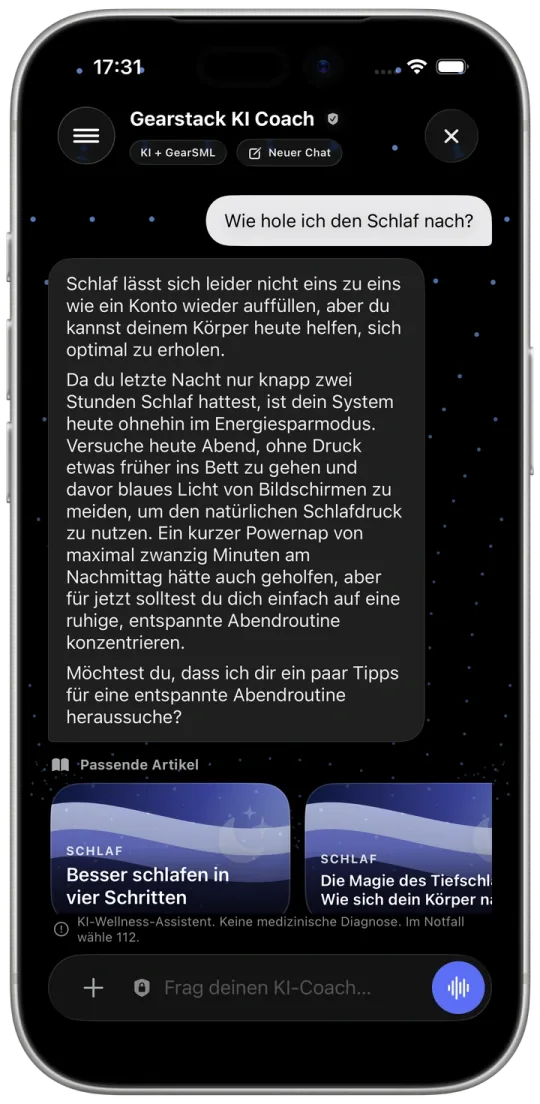
Gearstack Health turns HRV, sleep and training into a daily readiness view with clear next steps.
Gearstack Health is a wellness and prevention product, not a medical device. This text does not replace medical diagnosis, treatment or emergency care.
AI-assisted, reviewed by Kristijan Bezjak, founder of Gearstack.