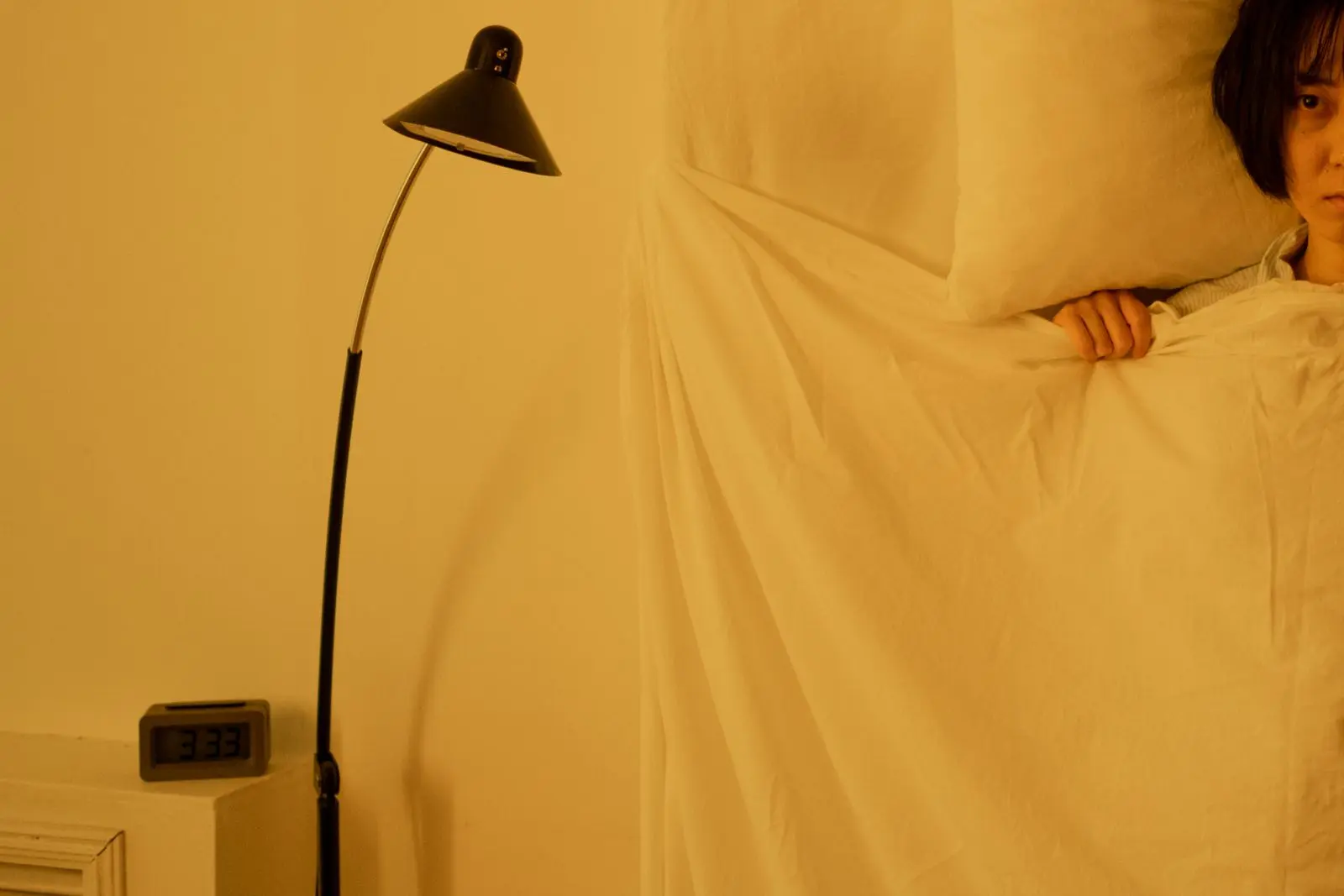
Waking up at night belongs to sleep, not to its disorders. Most people surface several times a night and remember none of it by morning. What turns it into a problem is what happens next. This guide explains why three in the morning is so often the time, when it becomes a disorder, and what helps while you are lying there.
Waking is part of the pattern
Sleep runs in cycles of roughly ninety minutes. At the end of each cycle you rise into a very light state or wake fully, turn over and drift off again. In most adults that happens several times a night, and the majority of those moments never reach memory, because the brain only stores recollections after one to two minutes of wakefulness. So the people who believe they sleep straight through wake up too. They simply do not notice.
Why three in the morning specifically
Two things coincide at that hour. Deep sleep is largely done by then, and the second half of the night consists mostly of lighter sleep and REM, from which waking is easier. At the same time core body temperature reaches its low point and cortisol begins its morning rise. Waking at three does not mean you are in an unusually restless phase, it means you are in the first phase from which waking is easy at all.
Waking up versus lying awake
What matters is not that you wake but how long you stay awake. Brief waking with immediate return to sleep is unremarkable, even several times a night. Clinicians generally speak of insomnia when getting back to sleep takes longer than half an hour, happens at least three nights a week and persists for at least three months, with daytime consequences. Anything below that is an unpleasant night, not a diagnosis.
What makes lying awake last longer
The strongest amplifier is your reaction to it. Checking the clock produces a number, and the brain immediately calculates how little sleep remains, which creates the tension that prevents falling back asleep. Add alcohol, which breaks up the second half of the night, an overly warm room, a full bladder from drinking late, and the phone, whose light and content both wake you. For many people the irritation about being awake tops the list, and it weighs the most.
What helps in the moment
Do not look at the clock; that is the single most effective step. Stay lying down, breathe calmly and make the out-breath longer than the in-breath, because that engages the resting side of the nervous system. If nothing moves after about twenty minutes, get up, go to another room, do something quiet in as little light as possible and return only when sleepy. It sounds backwards, but it prevents the bed from becoming the place where you lie awake. That association is exactly what keeps insomnia alive.
When it belongs in front of a doctor
If waking comes with loud snoring, observed breathing pauses or shortness of breath, it belongs in a consultation regardless of duration. The same holds for regularly waking with a racing heart, getting up to urinate several times a night, and daytime sleepiness that persists for weeks despite enough time in bed. A sleep report from a watch is no substitute for an examination, but it is a useful starting point, because it shows how regular the pattern is.
Common questions
- Is it bad that I wake at the same time every night?
- Not necessarily. Regularity argues for a stable rhythm rather than against it. Only if you then lie awake for a long time and are noticeably impaired during the day is it worth working on sleep timing, alcohol and room temperature.
- Should I get up or stay in bed?
- Stay in bed as long as you are calm and not annoyed. Once you notice you are awake and tense, getting up after about twenty minutes is the better choice, because it keeps the bed from being associated with lying awake.
- My watch shows wake phases I never noticed. Is that right?
- Very probably yes. Brief wake phases do not reach memory, but the watch registers them through movement and pulse. As long as your overall sleep pattern is stable and you wake up rested, there is nothing to worry about.
Sources
Gearstack Health
Your numbers in context
Gearstack Health turns HRV, sleep and training into a daily readiness view with clear next steps.
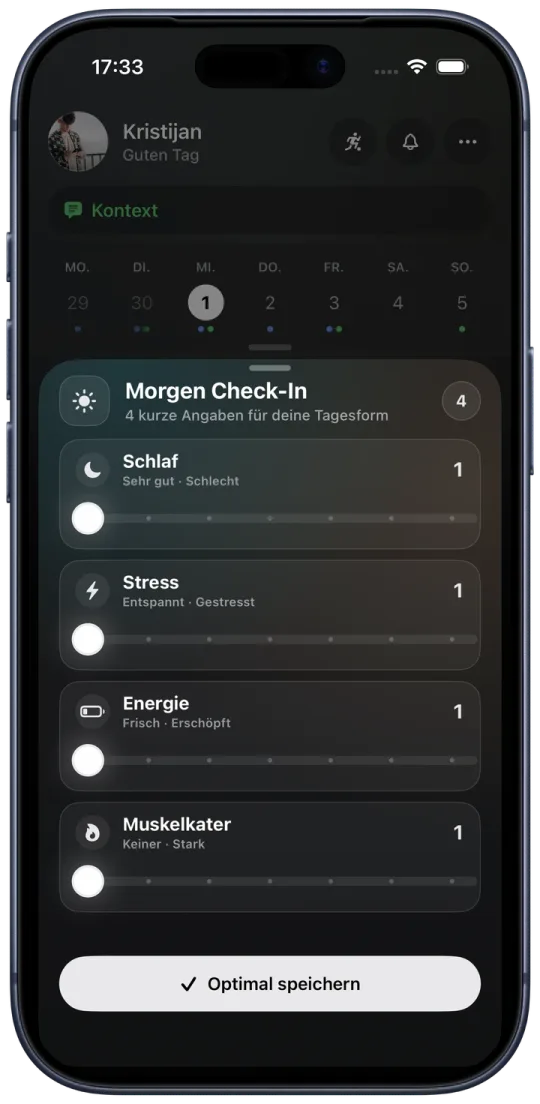
Gearstack Health is a wellness and prevention product, not a medical device. This text does not replace medical diagnosis, treatment or emergency care.
AI-assisted, reviewed by Kristijan Bezjak, founder of Gearstack.