
Almost every load management effort in amateur football begins with a spreadsheet, and that is no bad start: a spreadsheet costs nothing, everyone understands it, and the method behind it is the same as in any software. This article shows what the clean spreadsheet solution looks like, the three places where it tears in practice and how to recognise that the squad has outgrown it.
The spreadsheet that actually works
Whoever wants to start with Excel or Google Sheets needs less than most templates suggest: four columns. Date, player name, session effort from one to ten, duration in minutes. From that, one formula computes the session load (effort times minutes, the validated session RPE), a second sums the week per player, a third compares the current week with the average of the past four. More sheets, more colours and more categories make the file more impressive and its upkeep less likely. Four columns and three formulas are the entire mathematics of load management.
Tear one: the collecting
The maths is never the problem, the data is. Twenty players report their effort by shout, in the group chat or not at all, and the coach transfers it by hand in the evening. Experience says this holds for three to six weeks; then single reports go missing, then whole days, and a load spreadsheet with holes is worse than none: it shows reassuringly low weekly loads that are merely collection gaps. The difference between spreadsheet and dashboard sits exactly here: with a dashboard every player taps his own report into the phone, and whatever is unreported is visibly open instead of silently empty.
Tear two: the recovery side is missing
Load is only half the loop; the other half is how players absorb it. Sleep, heart rate variability and resting heart rate live in the players’ sports watches, and no path leads from there into a spreadsheet: nobody types in their night values every morning. In practice this means the spreadsheet solution manages half-blind: it sees the work but never the body’s answer. Exactly this connection, load from the report plus recovery from the watch, per player against his own baseline, is the part only a dashboard delivers.
Tear three: the spreadsheet belongs to one person
The file lives on the computer of the one coach who built it. The assistant does not see it, the fitness coach keeps his own, and when the creator leaves the club, the entire history leaves with him. Add data protection, which for minors is no side issue: health-related entries in a freely copyable file without access control and without revocable permissions are a risk most clubs notice only when a parent asks about it.
The honest decision guide
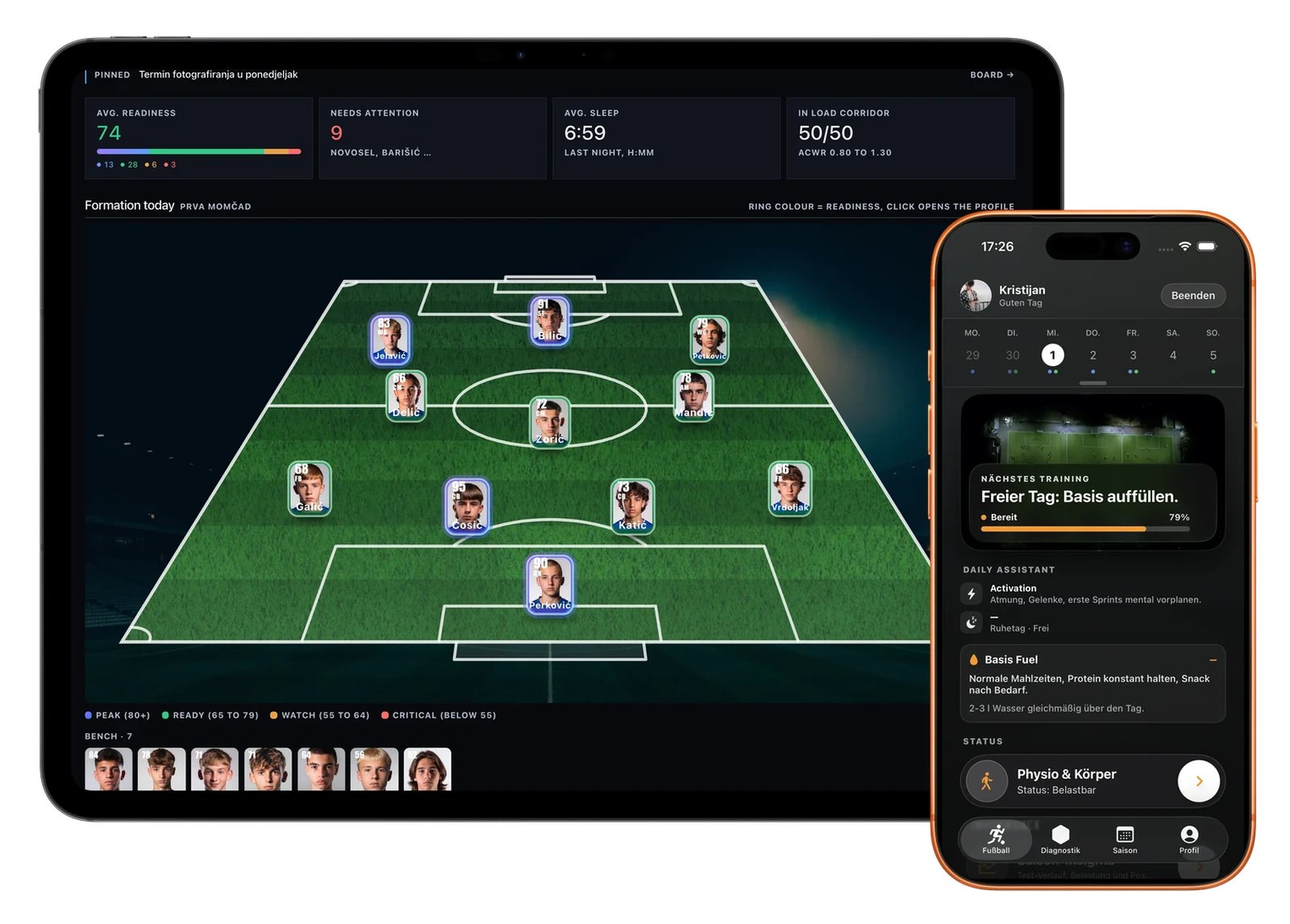
The spreadsheet is right for the start and for small groups: a coach managing his own session, a development group of eight, a trial across the preparation phase. It is the cheapest way to find out whether load management suits the club. The switch pays off once three things come together: a full squad, more than one person who should read along, and the wish to include the players’ watch data. The Gearstack dashboard then takes over exactly the three tear points: automatic collection via phone report, recovery data from the watch, and role-based access with permissions the player controls. The method stays the same as in the spreadsheet; only the collecting, computing and sharing disappears.
Common questions
- Is there a ready template for the load spreadsheet?
- The structure is built in five minutes: four columns (date, player, effort 1 to 10, minutes), one formula for effort times minutes, a weekly sum per player and the comparison of the current week with the average of the past four. Reporting discipline matters more than the template.
- At what squad size does the spreadsheet stop being enough?
- As a rule of thumb: up to about ten players and a single keeper of the file, upkeep stays realistic. With a full squad, several coaches or the wish for watch data, the effort tips over, and gaps make the numbers unusable.
- What happens to the spreadsheet data when switching?
- The history keeps its value, because the method is the same. Weekly loads from the spreadsheet era still serve as a baseline; what matters is reporting seamlessly through the switch so no gap opens between the two worlds.
For clubs: Eleven players, eleven readiness scores
Sources
Gearstack Health
Your numbers in context
Gearstack Health turns HRV, sleep and training into a daily readiness view with clear next steps.
Gearstack Health is a wellness and prevention product, not a medical device. This text does not replace medical diagnosis, treatment or emergency care.
AI-assisted, reviewed by Kristijan Bezjak, founder of Gearstack.