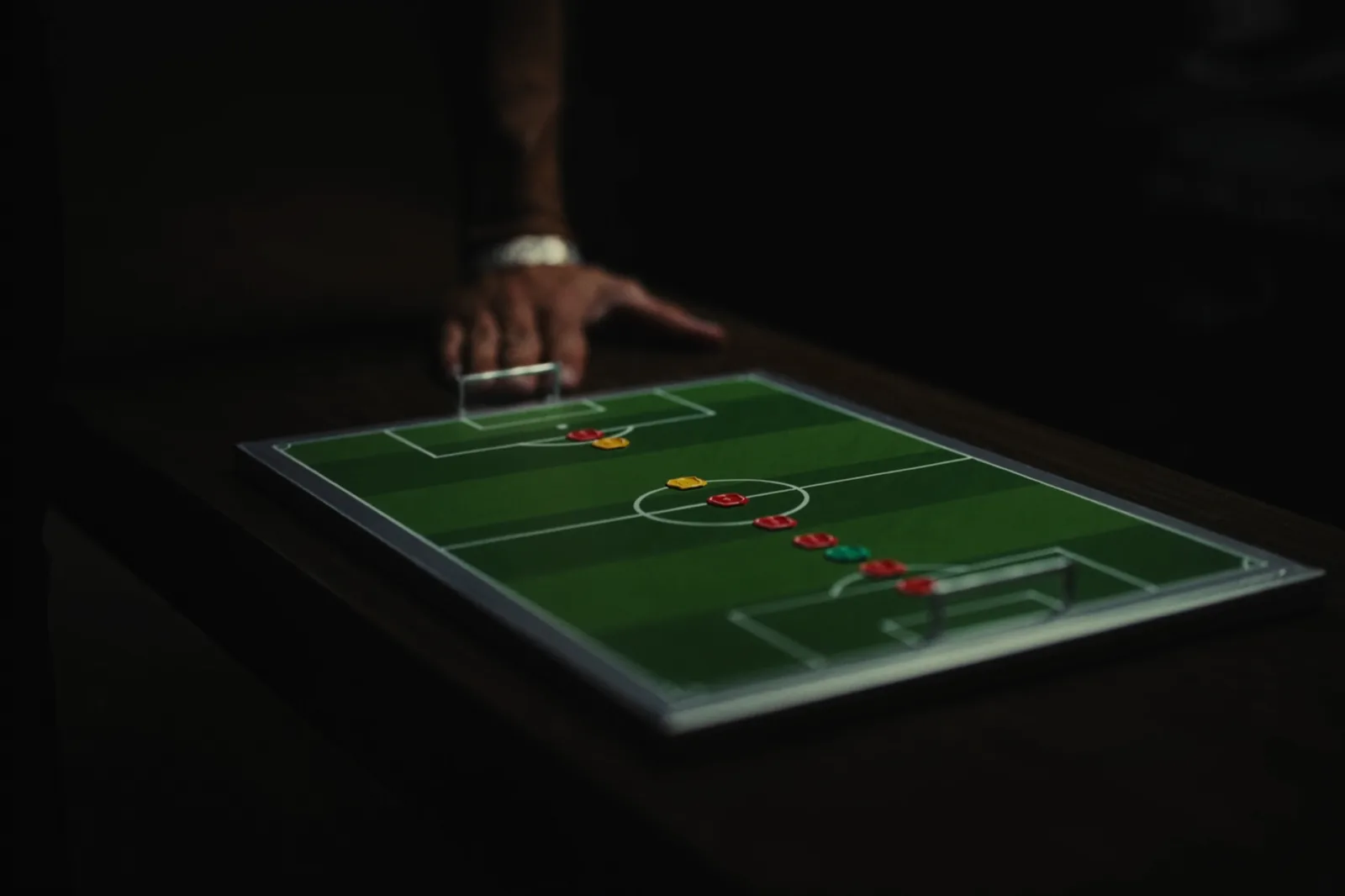
In professional football the coaching staff looks at a dashboard every morning: who slept how well, who carries how much load from the week, who needs an easy session today. The technology is no longer a budget question. The real question is different: what does a team dashboard have to show so that an amateur or youth coach still opens it in week three?
Three inputs are enough: attendance, effort, state
Most systems do not fail for lack of data but for too much of it. A useful overview needs three inputs per player: Was he at training? How hard was the session for him, on a scale of one to ten? And how does he feel today? Effort times duration gives a weekly load you can compare, no devices needed. Whoever wears a sports watch adds sleep and heart data automatically. The order matters: the system must work without a watch and get better with one, not the other way round, because in an amateur squad the whole team never wears a device.
The overview must sort, not collect
A dashboard showing twenty players in alphabetical order answers no question. The coach’s morning question is: who needs my attention today? So exactly that belongs at the top, the two or three players whose numbers stand out because load jumped in a short time, sleep collapsed or nothing has been reported for days. The rest of the squad can be a green line. A good team dashboard is read in thirty seconds; everything beyond that is for the weekend.
Make load spikes visible before they hurt
The most valuable view in practice compares the current weekly load with the average of the previous weeks. The sports science behind it is the ratio of acute to chronic load: when a week rises well above the usual, complaints pile up in studies, especially in youth football. For club life the simple version is enough: whoever roughly doubles his load within two weeks shows up on the dashboard before he shows up in the treatment room. After a tournament week, a camp or a club change this is the view that matters most.
No trust, no data: privacy is part of the system
A team dashboard lives on honest reporting, and players only report what is kept safe. Three rules have proven themselves: every player decides what he shares and can withdraw the permission at any time. The coach sees states and trends, not diagnoses. And reporting a complaint must not automatically cost a place in the line-up, otherwise nobody reports anything. For minors, parental consent is required on top. This is not paperwork next to the system, it is the condition under which the data exists at all.
Where it fails in daily use, and how not to
The typical story: a motivated coach introduces a spreadsheet, everyone fills it in for four weeks, then it tips over. The causes are almost always the same. Reporting takes too long, so a player’s check-in must be done in under thirty seconds, ideally on the phone right after training. Nothing happens with the data, so the coach has to visibly react to it, an easier session for the flagged player, a short conversation. And there is no rhythm: fixed reporting time, fixed morning look by the coach. Systems last when they become habit, not while they remain a project.
What the club gets out of it
A working team dashboard changes three things. The line-up leans on today’s state instead of the impression from the last match. Overload shows up earlier, which in youth football simply saves absences. And the club can prove development: whoever documents attendance, load and progress over months holds parent meetings and development talks with numbers instead of memories. That is exactly what we build the Gearstack team dashboard for, one page for the whole squad, fed by a short player check-in or their sports watch.
Common questions
- Does an amateur club need wearables for this?
- No. Attendance, post-session effort and a short state report are enough for a usable load overview. Sports watches refine the picture with sleep and heart data, but they are an addition, not a requirement.
- What is the most important number in a team dashboard?
- The change of weekly load against the previous weeks. Fast upward jumps go along with measurably more complaints in youth players, while high but steady load barely does.
- May coaches see health data of youth players?
- Only with consent, for minors additionally from the parents, and only as much as training management requires: states and trends instead of diagnoses. The permission must be revocable at any time.
For clubs: Eleven players, eleven readiness scores
Sources
Gearstack Health
Your numbers in context
Gearstack Health turns HRV, sleep and training into a daily readiness view with clear next steps.
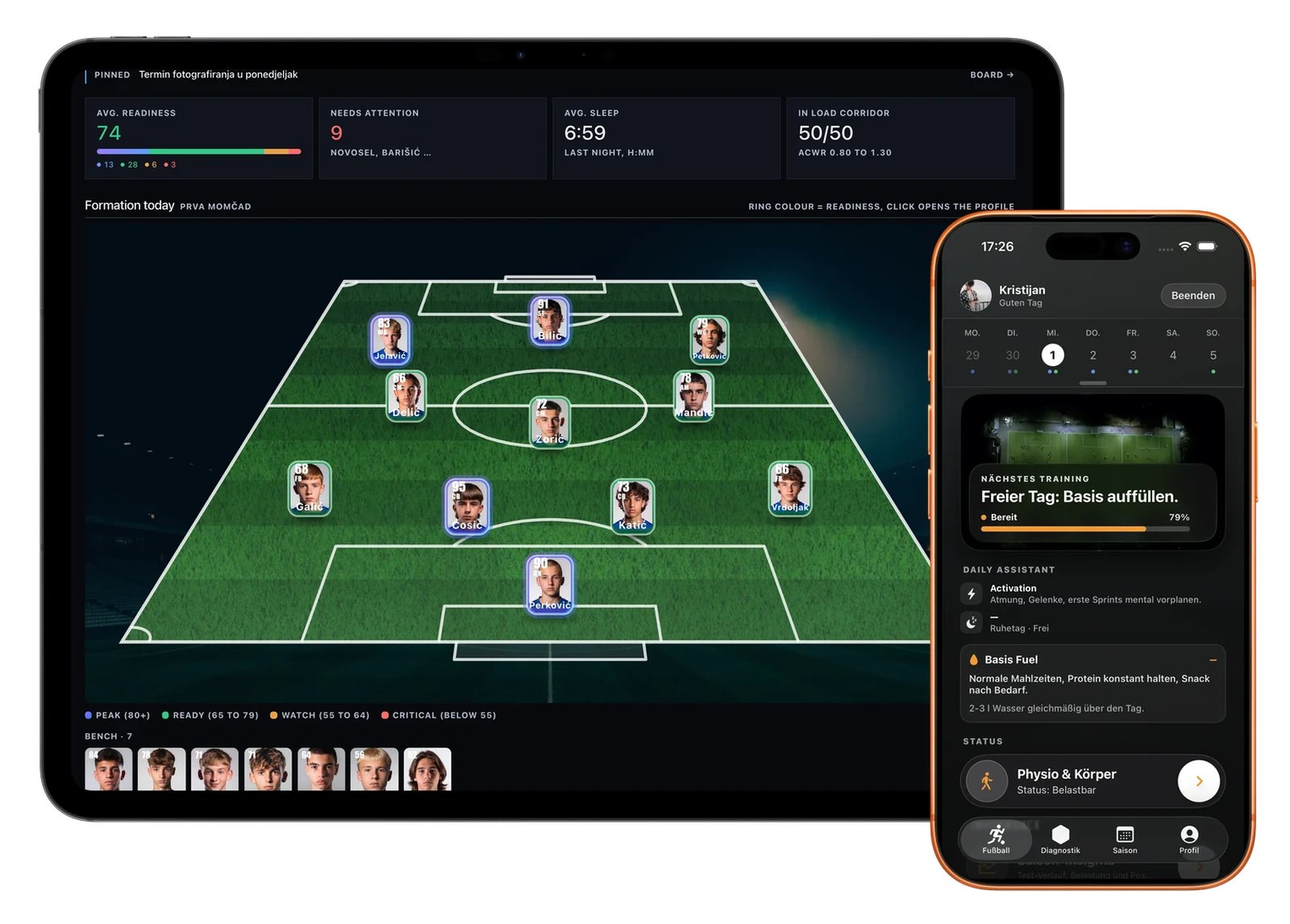
Gearstack Health is a wellness and prevention product, not a medical device. This text does not replace medical diagnosis, treatment or emergency care.
AI-assisted, reviewed by Kristijan Bezjak, founder of Gearstack.