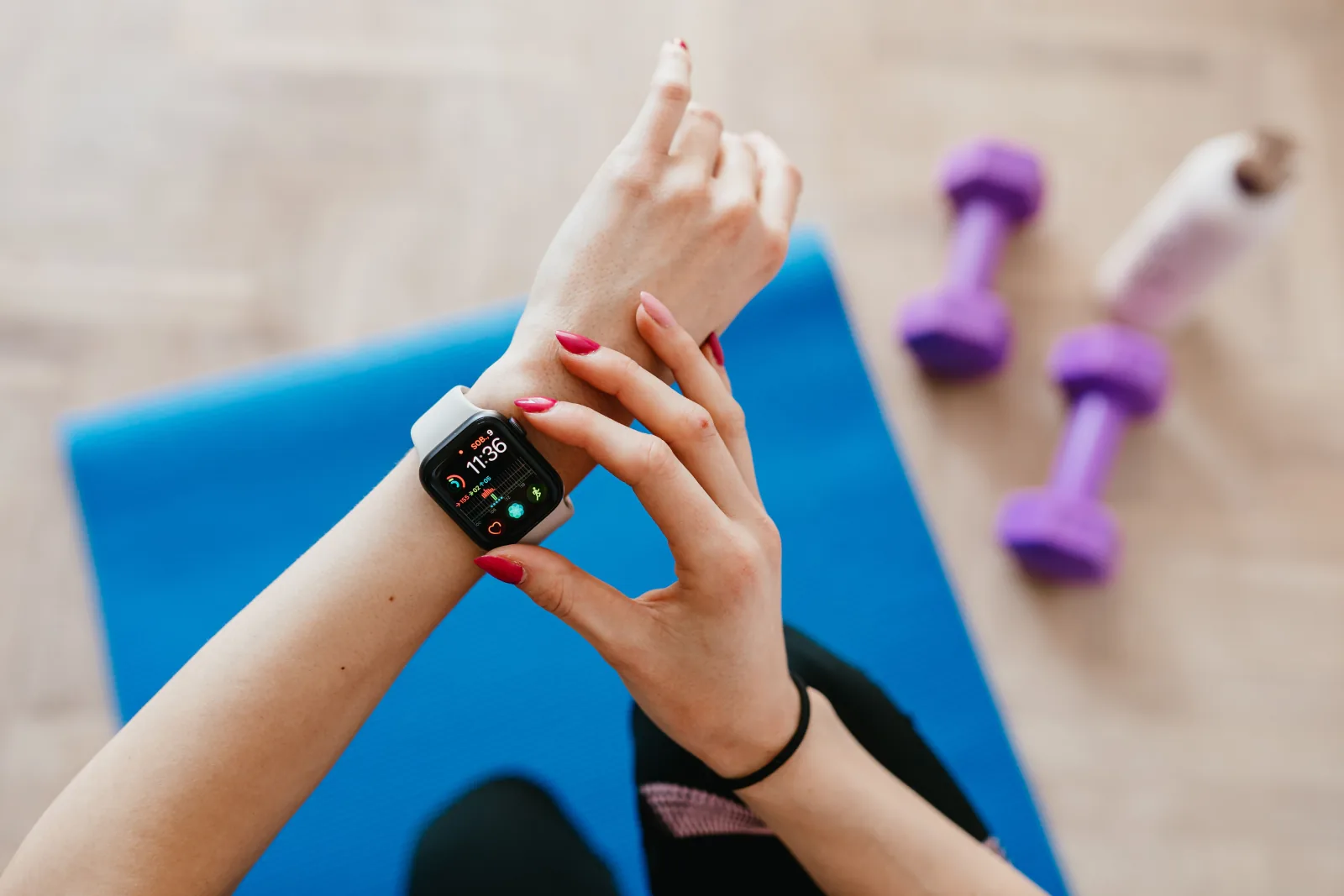
A readiness score compresses several overnight signals into one number. That is convenient and at the same time its biggest weakness: four signals become one value, and information is lost on the way. This guide shows what is inside and how to handle it.
What the number actually claims
A readiness value is not a measurement, it is an estimate. It does not claim how fit you are, it claims how far your body has returned toward its own baseline since yesterday. That is why someone with excellent fitness can have poor readiness and the other way around. The value compares you only to yourself, specifically to your own recent weeks. Reading it as a fitness grade misses the point. Reading it as an answer to whether last night balanced out the last load is correct.
The ingredients
Four signals carry the value. Sleep contributes duration, the distribution of stages and how continuous the night was. HRV shows how flexibly your nervous system is currently moving between effort and recovery. Overnight resting heart rate is slower to move but steadier, and it responds clearly to load, heat and infections coming on. On top sits training load from the past few days, because a hard session still echoes two days later. None of these signals is enough on its own, which is exactly why anything is calculated at all.
Weighting is the real problem
The hard question is how strongly each value counts. In one person HRV is the most sensitive early signal, in another it barely moves and resting heart rate says more. Fixed weights therefore always misfit part of the user base. The sensible approach is to normalise each signal against that person’s own range before combining, rather than comparing raw values. Only then does a given deviation mean roughly the same thing across two people. Systems that hand you a score on day one are guessing more than they admit.
No baseline, no value
A readiness score needs history. Two to four weeks of overnight measurement is the minimum before the number carries weight. Before that the system does not know your normal HRV, your normal resting heart rate or your typical sleep duration. It can only work from population averages, and those fit very few people. It is also why switching watches or taking three weeks off makes the score briefly useless: the baseline has to rebuild.
When the score is wrong
There are situations where the number is systematically off. Missing nights, because the watch was charging, leave gaps that some systems fill with the last known value. Illness lowers HRV and raises heart rate, which arithmetically looks like overtraining. Crossing time zones shifts everything for days. And people who live very regularly end up with a narrow range, where small deviations produce large swings in the score. In all of those cases the problem is the data, not your body.
How to read it without obeying it
The value is a suggestion, not a verdict. It is useful when it agrees with how you feel, because then it confirms a decision you were going to make anyway. It gets interesting when it contradicts you: a good score on a bad mood is usually an invitation to start anyway. A poor score on a great mood is an invitation to keep the planned volume rather than add to it. What you should not do is drop a session purely because a number is below seventy.
Common questions
- Why is my readiness worse after a rest day?
- Because recovery is repair work with its own requirements. A rest day with little sleep, alcohol or heavy work stress can push the values down further than an easy run would. The score reflects your state, not your calendar.
- Can I improve the score by going to bed earlier?
- Usually yes, but not overnight. Consistent bedtimes matter more than a single long night, because they stabilise how sleep stages are distributed. One early evening after a week of short sleep barely moves the value.
- What do I do with a low score before a race?
- As a rule, nothing. Nerves and unfamiliar surroundings are normal before a race, and both depress the values without performance suffering. If you have trained well for weeks, do not over-read a single low morning reading.
For clubs: Eleven players, eleven readiness scores
Sources
Gearstack Health
Your numbers in context
Gearstack Health turns HRV, sleep and training into a daily readiness view with clear next steps.
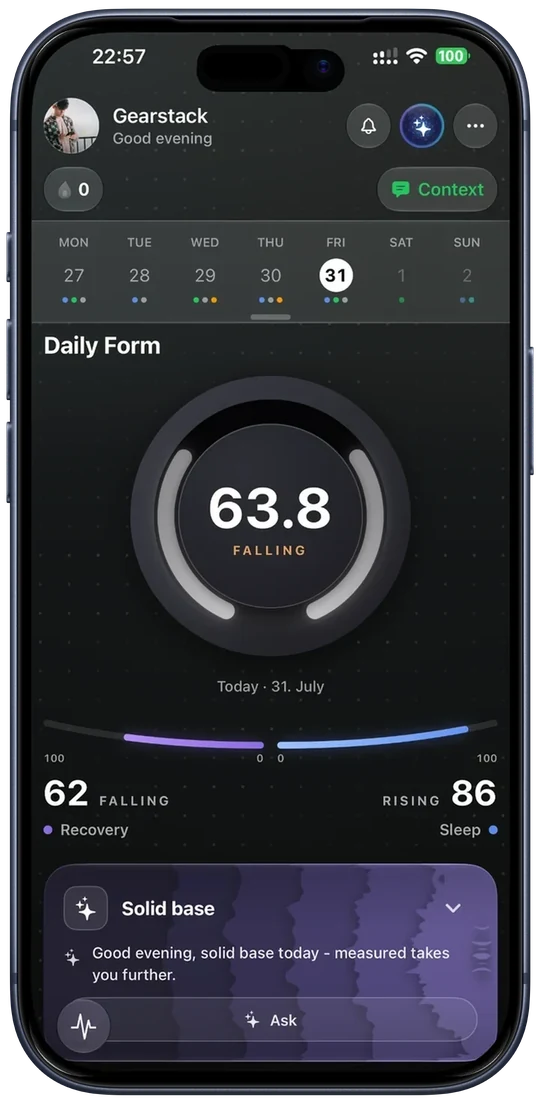
Gearstack Health is a wellness and prevention product, not a medical device. This text does not replace medical diagnosis, treatment or emergency care.
AI-assisted, reviewed by Kristijan Bezjak, founder of Gearstack.