
Almost every health app assumes you sleep at night. On rotating shifts that is wrong half the time, and the analysis falls apart. This guide shows what you can still take from your data.
Why the values look different
Your recovery values are tied to sleep, not to the clock. If you sleep during the day, your watch measures the same things. The difference is that daytime sleep happens under worse conditions: brighter, louder, shorter, and at a point when your core body temperature is actually rising. That reduces deep sleep share and HRV and raises resting heart rate. What you see is not a measurement error, it is the real cost of a shifted rhythm.
HRV after a night shift
After a worked night, HRV during daytime sleep typically sits below your normal, often clearly so. That is expected and not an alarm by itself. What is interesting is the recovery curve afterwards: how many days your value needs to return to your usual range. Tracking that across several blocks gives a very concrete answer to how well you handle night duty, and that answer varies a lot between people.
The attribution problem
The practical difficulty is technical. Many systems summarise a day from midnight to midnight. Sleep from eight in the morning to one in the afternoon then falls into the same calendar day as the shift before it, or it gets treated as a nap and is not counted as main sleep at all. The result is days with no values and days with two. When your trend shows gaps, that is often the reason rather than the watch failing to measure.
Think in baselines per shift type
The sensible approach is to keep several baselines, at least mentally. Your values after an early shift, a late shift and a night shift are three different distributions. Throwing them into one pot produces a wide, meaningless range in which nothing stands out any more. Compare night shift with night shift instead. Only then can you see whether this night block went worse than the last one, and that is the question you actually care about.
What to watch in the trend
Three patterns are worth following. First, recovery time after a night block: if it grows longer over the months, that points at accumulated load. Second, resting heart rate on days off: it should return to your normal level, and if it stays above it, recovery is missing. Third, sleep duration as a weekly average rather than per day, because split sleep otherwise looks systematically too short.
When to act
If your resting heart rate stays elevated for two weeks despite having had days off, that is a solid signal to cut training volume and prioritise sleep. The same applies when recovery after each night block takes longer than it did six months ago. What the data cannot show is the effect on mood and concentration. Persistent exhaustion, microsleep in traffic or low mood over weeks belong to a doctor, regardless of what your watch says.
Common questions
- My app shows no recovery values on shift days. Why?
- Usually because main sleep was not recognised as such. Many systems expect sleep inside a night window and classify a morning sleep as a nap. Some apps let you correct the sleep window manually, which closes the gaps.
- Is split sleep worse than one continuous block?
- Not fundamentally. For overall recovery the total and the regularity matter most. Split sleep does contain less deep sleep per block, which is why the longer of the two blocks should sit where you are most likely to be tired.
- Should I train less during night blocks?
- Usually yes, at least less intensely. Two loads at once, a shifted rhythm and hard sessions, add up. Easy movement on night shift days is often helpful though and makes falling asleep afterwards easier.
For companies and clinics: Making shift-work load readable
Sources
Gearstack Health
Your numbers in context
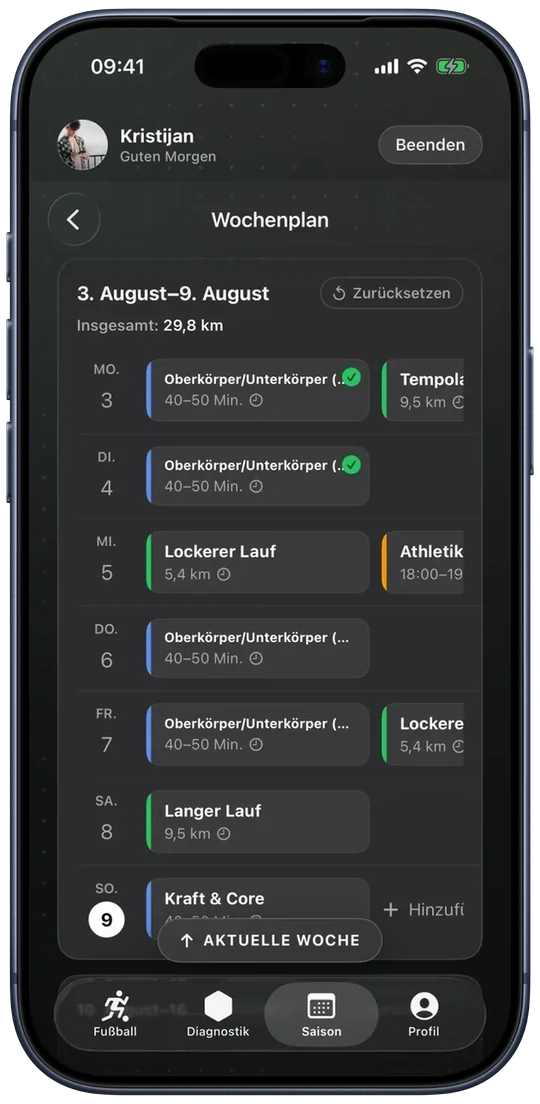
Gearstack Health turns HRV, sleep and training into a daily readiness view with clear next steps.
Gearstack Health is a wellness and prevention product, not a medical device. This text does not replace medical diagnosis, treatment or emergency care.
AI-assisted, reviewed by Kristijan Bezjak, founder of Gearstack.