
A day does not have to become motionless just because a long workout will not fit. Exercise snacks are short, deliberate bouts of movement that can sit between appointments. They are a practical option with clear limits.
What counts as an exercise snack
An exercise snack is a brief, defined movement session that needs little preparation. It might be brisk stair climbing, a short walk, a small block of squats and push-ups, or a few minutes on a bike. What matters is that the session is planned, safe and repeatable. The name does not dictate how hard the effort must be. On a sedentary working day, a purposeful movement break may be more realistic than waiting for a perfect training window that never arrives.
What one randomized trial actually found
A randomized controlled trial compared stair-climbing exercise snacks with moderate continuous training in inactive, otherwise healthy adults. Both approaches improved cardiorespiratory fitness in that limited setting, while the brief protocol did not show a corresponding benefit for maximal fat oxidation. That is a useful signal, not proof that any short activity can replace a complete workout. The participant group, the specific stair protocol, and supervised study conditions all limit how confidently the result can be applied to other people and real-world routines.
Make the starting point smaller than the excuse
Begin with a fixed cue: after a meeting, before lunch, or as soon as you get home. Attach one session that remains realistic on a crowded day, such as a short stair round or a walk around the block. Do not redesign the clothes, route, and exercise list every time. Repetition becomes easier when starting requires almost no negotiation. Add time or intensity only after the basic pattern has held for several weeks; an ambitious plan that rarely happens is less useful than a modest one you can reliably begin.
Match intensity to the day
Short sessions can be demanding, but they do not need to be hard every day. After sound sleep and with a normal sense of energy, brisk stairs or a stronger bodyweight block may fit. On an exhausted day, a calm walk is the more sensible version. Stop with pain, dizziness, unusual breathlessness, or chest symptoms and seek medical assessment. People returning after a long inactive period, those who are pregnant, or anyone living with a heart, lung, or metabolic condition should discuss suitable intensity before trying vigorous versions.
Use mini sessions as a bridge, not an alibi
Exercise snacks can accumulate movement and protect a routine when the calendar is tight. They do not automatically cover every part of balanced training. Strength, endurance, mobility, and recovery may still require longer or more targeted sessions depending on your starting point. Look beyond whether you completed one snack and watch how activity, sleep, resting heart rate, and perceived energy move over weeks. One good day is feedback; a recurring pattern is a more useful basis for decisions.
Common questions
- How long does an exercise snack need to be?
- There is no universal minimum that suits every person and goal. Choose a short session you can repeat safely, then progress from there. Load, consistency, starting level, and the rest of your training all matter together.
- Can exercise snacks replace a full workout?
- Sometimes a mini session is the realistic alternative to no movement at all. Over the long term, the answer depends on your goal: broader strength, endurance, and performance goals will usually still require more targeted sessions.
Sources
Gearstack Health
Turn spare minutes into a pattern you can see
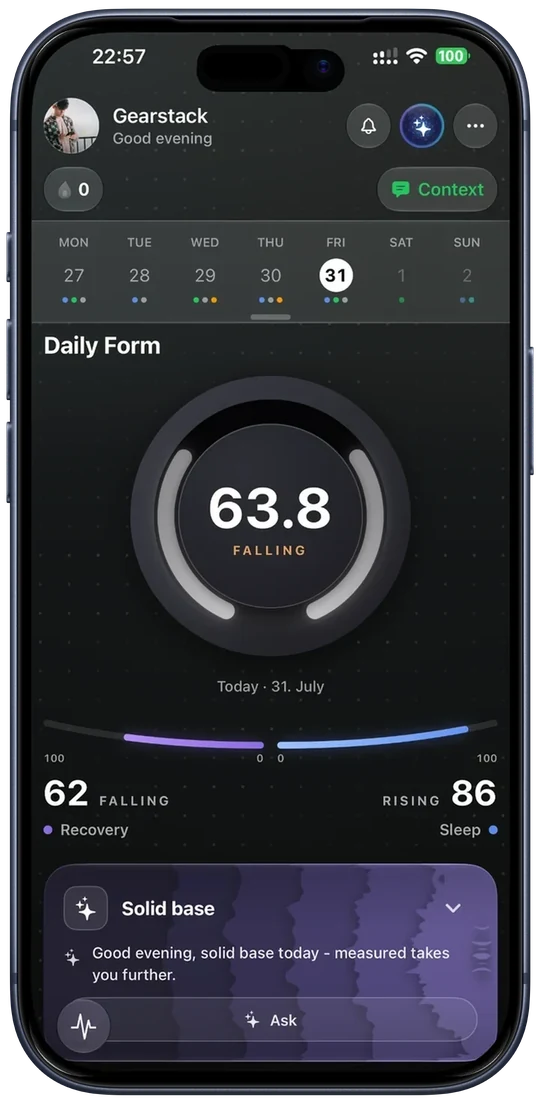
Gearstack brings movement, sleep, and readiness into one context. See when a short session fits the day and when recovery is the better call.
Gearstack Health is a wellness and prevention product, not a medical device. This text does not replace medical diagnosis, treatment or emergency care.
AI-assisted, reviewed by Kristijan Bezjak, founder of Gearstack.